This is only the third "Legend" I have done with a sports figure involved. One was Vince Lombardi and the other was Michael Jordan. I was never one who was into boxing. I only watched one boxing match in my whole life and it was Muhammad Ali versus Ken Norton. Ali won. Anyhow, while I may not be up to par on my boxing knowledge, I am smart enough to know that Muhammad Ali did just as much for the world outside the ring as anything he done inside it. His recent passing provoked me to move his "Legend" segment up.
Muhammad Ali /ɑːˈliː/ (born Cassius Marcellus Clay, Jr.; January 17, 1942 – June 3, 2016) was an American Olympic and professional boxer and activist.
He is widely regarded as one of the most significant and celebrated
sports figures of the 20th century. From early in his career, Ali was
known as an inspiring, controversial and polarizing figure both inside
and outside the ring.
Cassius Marcellus Clay, Jr. /ˈkæʃəs/ was born on January 17, 1942, in Louisville, Kentucky. He had a sister and four brothers. He was named for his father, Cassius Marcellus Clay Sr., who himself was named in honor of the 19th-century Republican politician and staunch abolitionist, Cassius Marcellus Clay, also from the state of Kentucky.
Clay's father's paternal grandparents were John Clay and Sallie Anne
Clay; Clay's sister Eva claimed that Sallie was a native of Madagascar. He was a descendant of slaves of the antebellum South, and was predominantly of African descent, with Irish and English heritage. His father painted billboards and signs, and his mother, Odessa O'Grady Clay,
was a domestic helper. Although Cassius Sr. was a Methodist, he allowed
Odessa to bring up both Cassius and his younger brother Rudolph "Rudy" Clay (later renamed Rahman Ali) as Baptists. He grew up in racial segregation.
His mother recalled one occasion where he was denied a drink of water
at a store. "They wouldn't give him one because of his color. That
really affected him." He was also affected by the 1955 murder of Emmett Till, which led to young Clay and a friend taking out their frustration by vandalizing a local railyard.
Clay was first directed toward boxing by Louisville police officer and boxing coach Joe E. Martin,
who encountered the 12-year-old fuming over a thief taking his bicycle.
He told the officer he was going to "whup" the thief. The officer told
him he had better learn how to box first. For the last four years of Clay's amateur career he was trained by boxing cutman Chuck Bodak.
Clay made his amateur boxing debut in 1954. He won six Kentucky Golden Gloves titles, two national Golden Gloves titles, an Amateur Athletic Union national title, and the Light Heavyweight gold medal in the 1960 Summer Olympics in Rome.
Clay's amateur record was 100 wins with five losses. Ali claimed in his
1975 autobiography that shortly after his return from the Rome Olympics
he threw his gold medal into the Ohio River after he and a friend were
refused service at a "whites-only" restaurant and fought with a white
gang. The story has since been disputed and several of Ali's friends,
including Bundini Brown and photographer Howard Bingham, have denied it. Brown told Sports Illustrated writer Mark Kram, "Honkies sure bought into that one!" Thomas Hauser's biography of Ali stated that Ali was refused service at the diner but that he lost his medal a year after he won it. Ali received a replacement medal at a basketball intermission during the 1996 Olympics in Atlanta, where he lit the torch to start the games.
Clay made his professional debut on October 29, 1960, winning a six-round decision over Tunney Hunsaker.
From then until the end of 1963, Clay amassed a record of 19–0 with 15
wins by knockout. He defeated boxers including Tony Esperti, Jim Robinson, Donnie Fleeman, Alonzo Johnson, George Logan, Willi Besmanoff, Lamar Clark, Doug Jones and Henry Cooper. Clay also beat his former trainer and veteran boxer Archie Moore in a 1962 match.
These early fights were not without trials. Clay was knocked down both by Sonny Banks
and Cooper. In the Cooper fight, Clay was floored by a left hook at the
end of round four and was saved by the bell. The fight with Doug Jones
on March 13, 1963, was Clay's toughest fight during this stretch. The
number-two and -three heavyweight contenders respectively, Clay and
Jones fought on Jones' home turf at New York's Madison Square Garden.
Jones staggered Clay in the first round, and the unanimous decision for
Clay was greeted by boos and a rain of debris thrown into the ring
(watching on closed-circuit TV, heavyweight champ Sonny Liston quipped
that if he fought Clay he might get locked up for murder). The fight was
later named "Fight of the Year".
In each of these fights, Clay vocally belittled his opponents and
vaunted his abilities. He called Jones "an ugly little man" and Cooper a
"bum". He was embarrassed to get in the ring with Alex Miteff. Madison
Square Garden was "too small for me". Clay's behavior provoked the ire of many boxing fans. His provocative and outlandish behavior in the ring was inspired by professional wrestler "Gorgeous George" Wagner.
After Clay left Moore's camp in 1960, partially due to Clay's refusing to do chores such as dish-washing and sweeping, he hired Angelo Dundee, whom he had met in February 1957 during Ali's amateur career, to be his trainer. Around this time, Clay sought longtime idol Sugar Ray Robinson to be his manager, but was rebuffed.
By late 1963, Clay had become the top contender for Sonny Liston's title. The fight was set for February 25, 1964, in Miami Beach.
Liston was an intimidating personality, a dominating fighter with a
criminal past and ties to the mob. Based on Clay's uninspired
performance against Jones and Cooper in his previous two fights, and
Liston's destruction of former heavyweight champion Floyd Patterson
in two first-round knock outs, Clay was a 7–1 underdog. Despite this,
Clay taunted Liston during the pre-fight buildup, dubbing him "the big
ugly bear". "Liston even smells like a bear", Clay said. "After I beat
him I'm going to donate him to the zoo."
Clay turned the pre-fight weigh-in into a circus, shouting at Liston
that "someone is going to die at ringside tonight". Clay's pulse rate
was measured at 120, more than double his normal 54.
Many of those in attendance thought Clay's behavior stemmed from fear,
and some commentators wondered if he would show up for the bout.
The outcome of the fight was a major upset. At the opening bell, Liston
rushed at Clay, seemingly angry and looking for a quick knockout, but
Clay's superior speed and mobility enabled him to elude Liston, making
the champion miss and look awkward. At the end of the first round Clay
opened up his attack and hit Liston repeatedly with jabs. Liston fought
better in round two, but at the beginning of the third round Clay hit
Liston with a combination that buckled his knees and opened a cut under
his left eye. This was the first time Liston had ever been cut. At the
end of round four, as Clay returned to his corner, he began experiencing
blinding pain in his eyes and asked his trainer Angelo Dundee
to cut off his gloves. Dundee refused. It has been speculated that the
problem was due to ointment used to seal Liston's cuts, perhaps
deliberately applied by his corner to his gloves. Though unconfirmed, Bert Sugar claimed that two of Liston's opponents also complained about their eyes "burning".
Despite Liston's attempts to knock out a blinded Clay, Clay was able
to survive the fifth round until sweat and tears rinsed the irritation
from his eyes. In the sixth, Clay dominated, hitting Liston repeatedly.
Liston did not answer the bell for the seventh round, and Clay was
declared the winner by TKO.
Liston stated that the reason he quit was an injured shoulder.
Following the win, a triumphant Clay rushed to the edge of the ring and,
pointing to the ringside press, shouted: "Eat your words!" He added, "I
am the greatest! I shook up the world. I'm the prettiest thing that
ever lived."
In winning this fight, Clay became at age 22 the youngest boxer to take the title from a reigning heavyweight champion, though Floyd Patterson was the youngest to win the heavyweight championship at 21, during an elimination bout following Rocky Marciano's retirement. Mike Tyson broke both records in 1986 when he defeated Trevor Berbick to win the heavyweight title at age 20.
Soon after the Liston fight, Clay changed his name to Cassius X Clay,
and then later to Muhammad Ali upon converting to Islam and affiliating
with the Nation of Islam. Ali then faced a rematch with Liston scheduled for May 1965 in Lewiston, Maine.
It had been scheduled for Boston the previous November, but was
postponed for six months due to Ali's emergency surgery for a hernia
three days before.
The fight was controversial. Midway through the first round, Liston was
knocked down by a difficult-to-see blow the press dubbed a "phantom
punch". Ali refused to retreat to a neutral corner, and referee Jersey Joe Walcott
did not begin the count. Liston rose after he had been down about 20
seconds, and the fight momentarily continued. But a few seconds later
Walcott stopped the match, declaring Ali the winner by knockout. The
entire fight lasted less than two minutes.
Ali and then-WBA heavyweight champion boxer Ernie Terrell
had agreed to meet for a bout in Chicago on March 29, 1966 (the WBA,
one of two boxing associations, had stripped Ali of his title following
his joining the Nation of Islam). But in February Ali was reclassified
by the Louisville draft board as 1-A from 1-Y, and he indicated that he
would refuse to serve, commenting to the press, "I ain't got nothing
against no Viet Cong; no Viet Cong never called me nigger."
Amidst the media and public outcry over Ali's stance, the Illinois
Athletic Commission refused to sanction the fight, citing
technicalities.
Instead, Ali traveled to Canada and Europe and won championship bouts against George Chuvalo, Henry Cooper, Brian London and Karl Mildenberger.
Ali returned to the United States to fight Cleveland Williams
in the Houston Astrodome on November 14, 1966. The bout drew a
record-breaking indoor crowd of 35,460 people. Williams had once been
considered among the hardest punchers in the heavyweight division, but
in 1964 he had been shot at point-blank range by a Texas policeman,
resulting in the loss of one kidney and 10 feet (3.0 m) of his small
intestine. Ali dominated Williams, winning a third-round technical
knockout in what some consider the finest performance of his career.
Ali fought Terrell in Houston on February 6, 1967. Terrell was billed
as Ali's toughest opponent since Liston - unbeaten in five years and
having defeated many of the boxers Ali had faced. Terrell was big,
strong and had a three-inch reach advantage over Ali. During the lead up
to the bout, Terrell repeatedly called Ali "Clay", much to Ali's
annoyance (Ali called Cassius Clay his "slave name").
The two almost
came to blows over the name issue in a pre-fight interview with Howard Cosell. Ali seemed intent on humiliating Terrell. "I want to torture him", he said. "A clean knockout is too good for him."
The fight was close until the seventh round when Ali bloodied Terrell
and almost knocked him out. In the eighth round, Ali taunted Terrell,
hitting him with jabs and shouting between punches, "What's my name,
Uncle Tom, what's my name?" Ali won a unanimous 15-round decision.
Terrell claimed that early in the fight Ali deliberately thumbed him in
the eye - forcing Terrell to fight half-blind - and then, in a clinch,
rubbed the wounded eye against the ropes. Because of Ali's apparent
intent to prolong the fight to inflict maximum punishment, critics
described the bout as "one of the ugliest boxing fights". Tex Maule
later wrote: "It was a wonderful demonstration of boxing skill and a
barbarous display of cruelty." Ali denied the accusations of cruelty
but, for Ali's critics, the fight provided more evidence of his
arrogance.
After Ali's title defense against Zora Folley on March 22, he was stripped of his title due to his refusal to be drafted to army service.
His boxing license was also suspended by the state of New York. He was
convicted of draft evasion on June 20 and sentenced to five years in
prison and a $10,000 fine. He paid a bond and remained free while the
verdict was being appealed.
In March 1966, Ali refused to be inducted into the armed forces.
He was systematically denied a boxing license in every state and
stripped of his passport. As a result, he did not fight from March 1967
to October 1970 - from ages 25 to almost 29 - as his case worked its way
through the appeals process before his conviction was overturned in
1971. During this time of inactivity, as opposition to the Vietnam War
began to grow and Ali's stance gained sympathy, he spoke at colleges
across the nation, criticizing the Vietnam War and advocating African
American pride and racial justice.
On August 11, 1970, with his case still in appeal, Ali was granted a
license to box by the City of Atlanta Athletic Commission, thanks to
State Senator Leroy R. Johnson. Ali's first return bout was against Jerry Quarry on October 26, resulting in a win after three rounds after Quarry was cut.
A month earlier, a victory in federal court forced the New York State Boxing Commission to reinstate Ali's license. He fought Oscar Bonavena at Madison Square Garden in December, an uninspired performance that ended in a dramatic technical knockout of Bonavena in the 15th round. The win left Ali as a top contender against heavyweight champion Joe Frazier.
Ali and Frazier's first fight, held at the Garden on March 8, 1971, was nicknamed the "Fight of the Century",
due to the tremendous excitement surrounding a bout between two
undefeated fighters, each with a legitimate claim as heavyweight
champions. Veteran boxing writer John Condon called it "the greatest
event I've ever worked on in my life". The bout was broadcast to 35
foreign countries; promoters granted 760 press passes.
The Monday night fight lived up to its billing. In a preview of their
two other fights, a crouching, bobbing and weaving Frazier constantly
pressured Ali, getting hit regularly by Ali jabs and combinations, but
relentlessly attacking and scoring repeatedly, especially to Ali's body.
The fight was even in the early rounds, but Ali was taking more
punishment than ever in his career. On several occasions in the early
rounds he played to the crowd and shook his head "no" after he was hit.
In the later rounds - in what was the first appearance of the "rope-a-dope strategy" - Ali
leaned against the ropes and absorbed punishment from Frazier, hoping
to tire him. In the 11th round, Frazier connected with a left hook that
wobbled Ali, but because it appeared that Ali might be clowning as he
staggered backwards across the ring, Frazier hesitated to press his
advantage, fearing an Ali counter-attack. In the final round, Frazier
knocked Ali down with a vicious left hook, which referee Arthur Mercante
said was as hard as a man can be hit. Ali was back on his feet in three
seconds. Nevertheless, Ali lost by unanimous decision, his first professional defeat.
After the loss to Frazier, Ali fought Jerry Quarry, had a second bout with Floyd Patterson and faced Bob Foster in 1972, winning a total of six fights that year. In 1973, Ken Norton
broke Ali's jaw while giving him the second loss of his career. After
initially seeking retirement, Ali won a controversial decision against
Norton in their second bout, leading to a rematch at Madison Square
Garden on January 28, 1974, with Joe Frazier who had recently lost his
title to George Foreman.
Ali was strong in the early rounds of the fight, and staggered
Frazier in the second round. Referee Tony Perez mistakenly thought he
heard the bell ending the round and stepped between the two fighters as
Ali was pressing his attack, giving Frazier time to recover. However,
Frazier came on in the middle rounds, snapping Ali's head in round seven
and driving him to the ropes at the end of round eight. The last four
rounds saw round-to-round shifts in momentum between the two fighters.
Throughout most of the bout, however, Ali was able to circle away from
Frazier's dangerous left hook and to tie Frazier up when he was
cornered, the latter a tactic that Frazier's camp complained of
bitterly. Judges awarded Ali a unanimous decision.
The defeat of Frazier set the stage for a title fight against heavyweight champion George Foreman in Kinshasa, Zaire, on October 30, 1974 - a bout nicknamed "The Rumble in the Jungle". Foreman was considered one of the hardest punchers in heavyweight history. In assessing the fight, analysts pointed out that Joe Frazier and Ken Norton - who
had given Ali four tough battles and won two of them - had been both
devastated by Foreman in second round knockouts. Ali was 32 years old,
and had clearly lost speed and reflexes since his twenties. Contrary to
his later persona, Foreman was at the time a brooding and intimidating
presence. Almost no one associated with the sport, not even Ali's
long-time supporter Howard Cosell, gave the former champion a chance of winning.
Ali opened the fight moving and scoring with right crosses to Foreman's
head. Then, beginning in the second round - and to the consternation of
his corner - Ali retreated to the ropes and invited Foreman to hit him
while covering up, clinching and counter-punching, all while verbally
taunting Foreman. The move, which would later become known as the "Rope-A-Dope",
so violated conventional boxing wisdom - letting one of the hardest
hitters in boxing strike at will - that at ringside writer George Plimpton
thought the fight had to be fixed.
Foreman, increasingly angered, threw punches that were deflected and
did not land squarely. Midway through the fight, as Foreman began
tiring, Ali countered more frequently and effectively with punches and
flurries, which electrified the pro-Ali crowd. In the eighth round, Ali
dropped an exhausted Foreman with a combination at center ring; Foreman
failed to make the count. Against the odds, and amidst pandemonium in
the ring, Ali had regained the title by knockout.
Ali's next opponents included Chuck Wepner, Ron Lyle, and Joe Bugner.
Wepner, a journeyman known as "The Bayonne Bleeder", stunned Ali with a
knockdown in the ninth round; Ali would later say he tripped on
Wepner's foot. It was a bout that would inspire Sylvester Stallone to create the acclaimed film, Rocky.
Ali then agreed to a third match with Joe Frazier in Manila. The bout, known as the "Thrilla in Manila", was held on October 1, 1975,
in temperatures approaching 100 °F (38 °C). In the first rounds, Ali
was aggressive, moving and exchanging blows with Frazier. However, Ali
soon appeared to tire and adopted the "rope-a-dope" strategy, frequently
resorting to clinches. During this part of the bout Ali did some
effective counter-punching, but for the most part absorbed punishment
from a relentlessly attacking Frazier. In the 12th round, Frazier began
to tire, and Ali scored several sharp blows that closed Frazier's left
eye and opened a cut over his right eye. With Frazier's vision now
diminished, Ali dominated the 13th and 14th rounds, at times conducting
what boxing historian Mike Silver called "target practice" on Frazier's
head. The fight was stopped when Frazier's trainer, Eddie Futch, refused
to allow Frazier to answer the bell for the 15th and final round,
despite Frazier's protests. Frazier's eyes were both swollen shut. Ali,
in his corner, winner by TKO, slumped on his stool, clearly spent.
Ali fought Ken Norton for the third time at the Yankee Stadium
in September 1976, which he won in a heavily contested decision, which
was loudly booed by the audience. Afterwards, he announced he was
retiring from boxing to practice his faith, having converted to Sunni Islam after falling out with the Nation of Islam the previous year.
After returning to beat Alfredo Evangelista in May 1977, Ali struggled in his next fight against Earnie Shavers
that September, getting pummeled a few times by punches to the head.
Ali won the fight by another unanimous decision, but the bout caused his
longtime doctor Ferdie Pacheco
to quit after he was rebuffed for telling Ali he should retire. Pacheco
was quoted as saying, "the New York State Athletic Commission gave me a
report that showed Ali's kidneys were falling apart. I wrote to Angelo
Dundee, Ali's trainer, his wife and Ali himself. I got nothing back in
response. That's when I decided enough is enough."
In February 1978, Ali faced Leon Spinks
at the Hilton Hotel in Las Vegas. At the time, Spinks had only seven
professional fights to his credit, and had recently fought a draw with
journeyman Scott LeDoux. Ali sparred less than two dozen rounds in
preparation for the fight, and was seriously out of shape by the opening
bell. He lost the title by split decision. A rematch followed shortly
thereafter in New Orleans, which broke attendance records. Ali won a
unanimous decision in an uninspiring fight, making him the first
heavyweight champion to win the belt three times.
Following this win, on July 27, 1979, Ali announced his retirement
from boxing. His retirement was short-lived, however; Ali announced his
comeback to face Larry Holmes
for the WBC belt in an attempt to win the heavyweight championship an
unprecedented fourth time. The fight was largely motivated by Ali's need
for money. Boxing writer Richie Giachetti said, "Larry didn't want to
fight Ali. He knew Ali had nothing left; he knew it would be a horror."
It was around this time that Ali started struggling with vocal stutters and trembling hands. The Nevada Athletic Commission
(NAC) ordered that he undergo a complete physical in Las Vegas before
being allowed to fight again. Ali chose instead to check into the Mayo Clinic,
who declared him fit to fight. Their opinion was accepted by the NAC on
July 31, 1980, paving the way for Ali's return to the ring.
The fight took place on October 2, 1980, in Las Vegas Valley, with
Holmes easily dominating Ali, who was weakened from thyroid medication
he had taken to lose weight. Giachetti called the fight "awful ... the
worst sports event I ever had to cover". Actor Sylvester Stallone at
ringside said it was like watching an autopsy on a man who is still
alive.
Ali's trainer Angelo Dundee finally stopped the fight in the eleventh
round, the only fight Ali lost by knockout. The Holmes fight is said to
have contributed to Ali's Parkinson's syndrome. Despite pleas to definitively retire, Ali fought one last time on December 11, 1981, in Nassau, Bahamas, against Trevor Berbick, losing a ten-round decision.
Ali had a highly unorthodox boxing style for a heavyweight,
epitomized by his catchphrase "float like a butterfly, sting like a
bee". Never an overpowering puncher, Ali relied early in his career on
his superior hand speed, superb reflexes and constant movement, dancing
and circling opponents for most of the fight, holding his hands low and
lashing out with a quick, cutting left jab that he threw from
unpredictable angles. His footwork was so strong that it was extremely
difficult for opponents to cut down the ring and corner Ali against the
ropes. He was also able to quickly dodge punches with his head movement
and footwork.
One of Ali's greatest tricks was to make opponents over-commit by
pulling straight backward from punches. Disciplined, world-class boxers
chased Ali and threw themselves off balance attempting to hit him
because he seemed to be an open target, only missing and leaving
themselves exposed to Ali's counter punches, usually a chopping right.
Slow motion replays show that this was precisely the way Sonny Liston
was hit and apparently knocked out by Ali in their second fight. Ali often flaunted his movement by dancing the "Ali Shuffle", a sort of center-ring jig.
Ali's early style was so unusual that he was initially discounted
because he reminded boxing writers of a lightweight, and it was assumed
he would be vulnerable to big hitters like Sonny Liston.
Muhammad Ali defeated every top heavyweight in his era, which has been
called the golden age of heavyweight boxing. Ali was named "Fighter of
the Year" by Ring Magazine more times than any other fighter, and was involved in more Ring Magazine "Fight of the Year" bouts than any other fighter. He was an inductee into the International Boxing Hall of Fame and held wins over seven other Hall of Fame inductees. He was one of only three boxers to be named "Sportsman of the Year" by Sports Illustrated.
Source: Wikipedia
This work released through CC 3.0 BY-SA: Creative Commons
Showing posts with label Legends. Show all posts
Monday, June 20, 2016
Legends: Muhammad Ali
Thursday, October 23, 2014
Robin Williams: Legend
It's not often that the passing of someone of whom I have never met affects me or my life. This includes celebrity's. The thing is, Robin Williams wasn't just any celebrity. He was Robin Williams.Like millions of others, the news of his death hit me hard. More than I could have ever anticipated. While I never met Robin in real life, I guess I felt like I knew him because of his films and their effect on me. He made me laugh, he made me cry, he made me think. He made me wonder too.
More than that, he made me feel normal. Watching him doing his routines or playing a character, or especially watching one of his interviews, my friends would say this is how I act sometimes. It made me feel like an outcast when they would say this, but then it made me feel normal to see Robin do it. At least, if anything, it made me feel unique. But Robin was doing it to entertain people. Why was I acting like a fool for? Maybe for the same reason only, I wasn't getting paid for it. In the end, I guess he and I had a lot more in common than I thought. He was suffering inside just as I was. Being bi-polar and suffering from depression and suicidal thoughts, I too lived in a dark world just as he did. I'm still living in it and fighting for every ray of light I can muster into my world. I suppose Robin simply had enough. I worry too of when I might wake up one day and realize, I have had enough of the pain too? My family and friends worry about that as well.
Robin McLaurin Williams was born at St. Luke's Hospital in Chicago, Illinois, on July 21, 1951. His mother, Laurie McLaurin (c. 1923 – September 4, 2001), was a former model from Jackson, Mississippi; her great-grandfather was Mississippi senator and governor Anselm J. McLaurin. Williams's father, Robert Fitzgerald Williams (September 10, 1906 – October 18, 1987) was a senior executive in Ford Motor Company's Lincoln-Mercury Division. Williams had two half-brothers: Robert Todd Williams (June 14, 1938 – August 14, 2007) and McLaurin Smith (born 1947). He had English, Welsh, Irish, Scottish, German, and French ancestry. While his mother was a practitioner of Christian Science, Williams was raised as an Episcopalian and later authored the comedic list, "Top Ten Reasons to be an Episcopalian." During a TV interview on Inside the Actors Studio in 2001, he credited his mother as being an important early influence for his sense of humor, noting also that he tried to make her laugh to gain attention.
Williams attended public elementary school at Gorton Elementary School (now Gorton Community Center) and middle school at Deer Path Junior High School (now Deer Path Middle School), both in Lake Forest, Illinois. He described himself as a quiet and shy child who did not overcome his shyness until he became involved with his high school drama department. His friends recall him as being very funny. In late 1963, when Williams was twelve, his father was transferred to Detroit. They lived in a 40-room farmhouse on 20 acres in suburban Bloomfield Hills, Michigan, where he was a student at the private Detroit Country Day School. He excelled in school, where he was on the school's soccer team and wrestling team, and became class president.
After high school graduation, Williams enrolled at Claremont Men's College in Claremont, California to study political science, then later dropped out to pursue acting. Williams then studied theatre for three years at the College of Marin, a community college in Kentfield, California.
According to Marin drama professor James Dunn, the depth of Williams's
talent first became evident when he was cast in the musical Oliver! as Fagin. Williams was known to improvise during his time in Marin's drama program, putting cast members in hysterics. Dunn called his wife after one late rehearsal to tell her that Williams "was going to be something special."In 1973, Williams attained a full scholarship to the Juilliard School in New York City. He was one of only 20 students accepted into the freshman class and one of only two students to be accepted by John Houseman into the Advanced Program at the school that year; the other was Christopher Reeve. William Hurt and Mandy Patinkin were also classmates.
After his family moved to Marin County, Williams began his career doing stand-up comedy shows in the San Francisco Bay Area in the mid-1970s. His first performance took place at the Holy City Zoo, a comedy club in San Francisco, where he worked his way up from tending bar to getting on stage. In the 1960s, San Francisco was a center for a rock music renaissance, hippies, drugs, and a sexual revolution, and in the 1970s, Williams helped lead its "comedy renaissance," writes critic Gerald Nachman. Williams says he found out about "drugs and happiness" during that period, adding that he saw "the best brains of my time turned to mud."
He moved to Los Angeles and continued doing stand-up shows at various clubs, including the Comedy Club, in 1977, where TV producer George Schlatter saw him. Schlatter, realizing that Williams would become an important force in show business, asked him to appear on a revival of his Laugh-In show. The show aired in late 1977 and became his debut TV appearance. Williams also performed a show at the LA Improv that same year for Home Box Office. While the Laugh-In revival failed, it led Williams into a career in television, during which period he continued doing stand-up at comedy clubs, such as the Roxy, to help him keep his improvisational skills sharp.
Williams has credited other comedians with having influenced and inspired him, including Jonathan Winters, Peter Sellers, Nichols and May, and Lenny Bruce, partly because they attracted a more intellectual audience by using a higher level of wit. He also liked Jay Leno for his quickness in ad-libbing comedy routines, and Sid Caesar, whose acts he felt were "precious."
Williams won a Grammy Award
for the recording of his 1979 live show at the Copacabana in New York,
"Reality...What a Concept". Some of his later tours, after he became a
TV and film star, include An Evening With Robin Williams (1982), Robin Williams: At The Met (1986), and Robin Williams Live on Broadway
(2002). The latter broke many long-held records for a comedy show. In
some cases, tickets were sold out within thirty minutes of going on
sale.After a six-year break, in August 2008, Williams announced a new 26-city tour titled "Weapons of Self-Destruction". He said that this was his last chance to make jokes at the expense of the Bush administration, but by the time the show was staged, only a few minutes covered that subject. The tour started at the end of September 2009 and concluded in New York on December 3, and was the subject of an HBO special on December 8, 2009.
Williams stated that partly due to the stress of doing stand-up, he started using drugs and alcohol early in his career. He further stated that he never drank or did drugs while on stage but occasionally performed when ill with a hangover from the previous day. During the period he was using cocaine, Williams said it made him paranoid when performing on stage.
After the Laugh-In revival and appearing in the cast of the short-lived The Richard Pryor Show on NBC, Williams was cast by Garry Marshall as the alien Mork in a 1978 episode of the hit TV series Happy Days. Williams impressed the producer with his quirky sense of humor when he sat on his head when asked to take a seat for the audition. As Mork, Williams improvised much of his dialogue and physical comedy, speaking in a high, nasal voice. Mork's appearance was so popular with viewers that it led to a spin-off hit television sitcom, Mork & Mindy, which ran from 1978 to 1982; the show was written to accommodate Williams's improvisations. Although he played the same character as in Happy Days, the show was set in the present, in Boulder, Colorado, instead of the late 1950s in Milwaukee. Mork & Mindy at its peak had a weekly audience of 60 million and was credited with turning Williams into a "superstar." According to critic James Poniewozik, the show was especially popular among young people, as Williams became a "man and a child, buoyant, rubber-faced, an endless gusher of invention."
Mork became an extremely popular character, featured on posters, coloring books, lunchboxes, and other merchandise. Mork & Mindy was such a success in its first season that Williams appeared on the March 12, 1979, cover of Time magazine, then the leading news magazine in the U.S. The cover photo, taken by Michael Dressler in 1979, is said to have "[captured] his different sides: the funnyman mugging for the camera, and a sweet, more thoughtful pose that appears on a small TV he holds in his hands" according to Mary Forgione of the Los Angeles Times. This photo was installed in the National Portrait Gallery in the Smithsonian Institution shortly after Williams's death to allow visitors to pay their respects. Williams was also on the cover of the August 23, 1979, issue of Rolling Stone magazine, with the cover photograph taken by famed photographer Richard Avedon.
Starting in the late 1970s and throughout the 1980s, Williams began to reach a wider audience with his stand-up comedy, including three HBO comedy specials, Off The Wall (1978), An Evening with Robin Williams (1982), and Robin Williams: Live at the Met (1986). Also in 1986, Williams co-hosted the 58th Academy Awards.
Williams was also a regular guest on various talk shows, including The Tonight Show Starring Johnny Carson and Late Night with David Letterman,
on which he appeared 50 times. Letterman, who knew Williams for nearly
40 years, recalls seeing him first perform as a new comedian at the
Comedy Store in Hollywood, where Letterman and other comedians had
already been doing stand-up. "He came in like a hurricane," said
Letterman, who said he then thought to himself, "Holy crap, there goes
my chance in show business."Williams's stand-up work was a consistent thread through his career, as seen by the success of his one-man show (and subsequent DVD) Robin Williams: Live on Broadway (2002). He was voted 13th on Comedy Central's list "100 Greatest Stand-ups of All Time" in 2004.
Williams and Billy Crystal were in an unscripted cameo at the beginning of an episode of the third season of Friends. His many TV appearances included an episode of Whose Line Is It Anyway?, and he starred in an episode of Law and Order: SVU. In 2010, he appeared in a sketch with Robert De Niro on Saturday Night Live, and in 2012, guest-starred as himself in two FX series, Louie and Wilfred. In May 2013, CBS started a new series, The Crazy Ones, starring Williams, but the show was canceled after one season.
Williams's first film was the 1977 low-budget comedy Can I Do It 'Till I Need Glasses?. His first major performance was as the title character in Popeye (1980); though the film was a commercial flop, the role allowed Williams to showcase the acting skills previously demonstrated in his television work. He also starred as the leading character in The World According to Garp (1982), which Williams considered "may have lacked a certain madness onscreen, but it had a great core". Williams continued with other smaller roles in less successful films, such as The Survivors (1983) and Club Paradise (1986), though he felt these roles did not help advance his film career.
Williams's first major break came from his starring role in director Barry Levinson's Good Morning, Vietnam (1987), which earned Williams a nomination for the Academy Award for Best Actor. The film takes place in 1965 during the Vietnam War, with Williams playing the role of Adrian Cronauer, a radio "shock jock" who keeps the troops entertained with comedy and sarcasm. Williams was allowed to play the role without a script, improvising most of his lines. Over the microphone, he created voice impressions of people, including Walter Cronkite, Gomer Pyle, Elvis Presley, Mr. Ed, and Richard Nixon. "We just let the cameras roll," said producer Mark Johnson, and Williams "managed to create something new for every single take."
Many of his later roles were in comedies tinged with pathos. Williams's roles in comedy and dramatic films garnered him an Academy Award for Best Supporting Actor (for his role as a psychologist in Good Will Hunting), as well as two previous Academy Award nominations (for playing an English teacher in Dead Poets Society (1989), and for playing a troubled homeless man in The Fisher King (1991)). In 1991, he played an adult Peter Pan in the movie Hook, although he said he would have to lose twenty-five pounds.Other acclaimed dramatic films include Moscow on the Hudson (1984), Awakenings (1990), and What Dreams May Come (1998). In the 2002 film Insomnia, Williams portrayed a writer/killer on the run from a sleep-deprived Los Angeles policeman (played by Al Pacino) in rural Alaska. Also in 2002, in the psychological thriller One Hour Photo, Williams played an emotionally disturbed photo development technician who becomes obsessed with a family for whom he has developed pictures for a long time. The last Williams movie released during his lifetime was The Angriest Man in Brooklyn, a film addressing the value of life. In it, Williams played Henry Altmann, a terminally ill man who reassesses his life and works to redeem himself.
During his career, he starred as a voice actor in several animated films. His voice role as the Genie in the animated, musical fantasy film, Aladdin (1992) was written specifically for Williams. The film's directors stated that they took a risk by writing the role, and successfully convinced him to take it. Through approximately 30 hours of tape, Williams was able to improvise much of his dialogue and impersonated dozens of celebrity voices, including Ed Sullivan, Jack Nicholson, Robert De Niro, Groucho Marx, Rodney Dangerfield, William F. Buckley, Peter Lorre, Arnold Schwarzenegger, and Arsenio Hall. At first, Williams refused to take the role since it was a Disney movie, and he did not want the studio profiting by selling toys and novelty items based on the movie. He accepted the role with certain conditions: "I'm doing it basically because I want to be part of this animation tradition. I want something for my children. One deal is, I just don't want to sell anything - as in Burger King, as in toys, as in stuff." The film went on to become one of his most recognized and best loved roles, and was the highest grossing film of 1992, winning numerous awards, including a Golden Globe for Williams; Williams's performance as the Genie led the way for other animated films to incorporate actors with more star power for voice acting roles.
Williams appeared opposite Steve Martin at Lincoln Center in an Off-Broadway production of Waiting for Godot in 1988. He made his Broadway acting debut in Rajiv Joseph's Bengal Tiger at the Baghdad Zoo, which opened at the Richard Rodgers Theatre on March 31, 2011. He headlined his own one-man show, Robin Williams: Live on Broadway, that played at The Broadway Theatre in July 2002.
Williams married his first wife, Valerie Velardi in June 1978 following a live-in relationship with comedienne Elayne Boosler.
Velardi and Williams met in 1976 while he was working as a bartender at
a tavern in San Francisco. Their son Zachary Pym "Zak" Williams was
born in 1983.
During Williams's first marriage, he was involved in an extramarital
relationship with Michelle Tish Carter, a cocktail waitress whom he met
in 1984. Williams and Velardi divorced in 1988.On April 30, 1989, he married Marsha Garces, Zachary's nanny, who was pregnant with his child. They had two children, Zelda Rae Williams (born 1989) and Cody Alan Williams (born 1991). In March 2008, Garces filed for divorce from Williams, citing irreconcilable differences. Their divorce was finalized in 2010. Williams married his third wife, graphic designer Susan Schneider, on October 23, 2011, in St. Helena, California. Their residence was Williams's house in Sea Cliff in San Francisco, California.
Williams and Christopher Reeve became friends while both were studying at Juilliard; the two remained close friends until Reeve's death in 2004. Prior to his death, Reeve stated that hospital visits from Williams were the first time he had laughed since the horse-riding accident that left him a quadriplegic. When Reeve's medical insurance ran out, Williams paid many of his bills. Following the 2006 death of Reeve's widow, Dana, Williams provided practical and financial support for the couple's 14-year-old son.
During the late 1970s and early 1980s, Williams had an addiction to cocaine. Williams was a casual friend of comedian John Belushi, and the sudden death of Belushi, with the birth of his son Zak, prompted him to quit drugs and alcohol: "Was it a wake-up call? Oh yeah, on a huge level. The grand jury helped too." Williams turned to exercise and cycling to help alleviate his depression shortly after Belushi's death, according to bicycle shop owner Tony Tom, Williams stated, "cycling saved my life".
Williams started drinking alcohol again in 2003, while working on a film in Alaska. In 2006 he checked himself in to a substance-abuse rehabilitation center in Newberg, Oregon, saying he was an alcoholic.
Williams was hospitalized in March 2009 due to heart problems. He postponed his one-man tour for surgery to replace his aortic valve. The surgery was completed on March 13, 2009, at the Cleveland Clinic.
In mid-2014, Williams admitted himself into the Hazelden Foundation Addiction Treatment Center in Lindstrom, Minnesota, for treatment related to his alcoholism.
Williams's publicist Mara Buxbaum commented that the actor was suffering from severe depression prior to his death. Williams's wife Susan stated that in the period before his death, he had been sober but was diagnosed with early stage Parkinson's disease which was something he was "not yet ready to share publicly".
Williams died on the morning of August 11, 2014, at his home in Paradise Cay, California.
In the initial report released on August 12, the Marin County Sheriff's
Office deputy coroner stated Williams had hanged himself with a belt
and died from asphyxiation. His body was cremated and his ashes scattered in San Francisco Bay on August 12.News of Williams's death spread quickly worldwide. The entertainment world, friends, and fans responded to his sudden death through social media and other media outlets. His wife, Susan Schneider, said: "I lost my husband and my best friend, while the world lost one of its most beloved artists and beautiful human beings. I am utterly heartbroken." Williams's daughter Zelda responded to her father's death by stating that the "world is forever a little darker, less colorful and less full of laughter in his absence". U.S. President Barack Obama said of Williams: "He was one of a kind. He arrived in our lives as an alien but he ended up touching every element of the human spirit."
Broadway theaters in New York dimmed their lights for one minute in his honor. Broadway's Aladdin cast honored Williams by having the audience join them in a sing-along of "Friend Like Me", an Oscar-nominated song originally sung by Williams in the 1992 film. Fans of Williams created makeshift memorials at his star on the Hollywood Walk of Fame and at locations from his television and film career, such as the bench in Boston's Public Garden featured in Good Will Hunting; the Pacific Heights, San Francisco, home used in Mrs. Doubtfire; and the Boulder, Colorado, home used for Mork & Mindy. It was also reported that a book biography of Williams' life was in the works, to be written by New York Times writer, David Itzkoff.
On television, during the 66th Primetime Emmy Awards on August 25, 2014, comedian Billy Crystal presented a tribute to Williams, referring to him as "the brightest star in our comedy galaxy". On September 9, 2014, PBS aired a one-hour special devoted to Williams's career, and on Sept. 27, 2014, dozens of leading stars and celebrities held a tribute in San Francisco to celebrate his life and career.
Although Williams was first recognized as a stand-up comedian and
television star, he later became known for acting in film roles of
substance and serious drama. Williams was considered a "national
treasure" by many in the entertainment industry and by the public.His unusual free-form style of comedy became so identified with him that new comedians imitated him. Jim Carrey impersonated his Mork character early in his own career. Williams's high-spirited style has been credited with paving the way for the growing comedy scene which developed in San Francisco. Young comedians felt more liberated on stage by seeing Williams's spontaneous style: "one moment acting as a bright, mischievous child, then as a wise philosopher or alien from outer space." According to Judd Apatow, Williams' rapid-fire improvisational style was an inspiration as well as an influence for other comedians, however, his talent was unique enough that no one else tried to copy it.
As a film actor, Williams's roles often influenced others, both in and out of the film industry. Director Chris Columbus, who directed Williams in the 1993 film Mrs. Doubtfire, says that watching him work "was a magical and special privilege. His performances were unlike anything any of us had ever seen, they came from some spiritual and otherworldly place."
Looking over most of Williams's films, Alyssa Rosenberg at The Washington Post was "struck by the breadth of Williams' roles", and how radically different most were, writing that "Williams helped us grow up.
Indeed, this is why I think I mourn for him like I do .... he helped me to grow up.
Sources: Wikipedia
This work released through CC 3.0 BY-SA - Creative Commons
Tuesday, August 5, 2014
Michael Jordan: Sports Legend
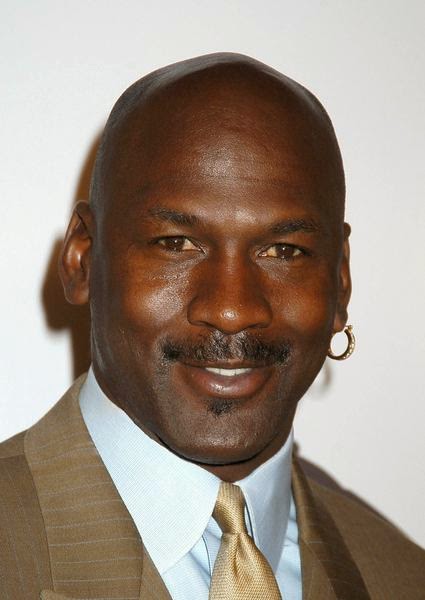
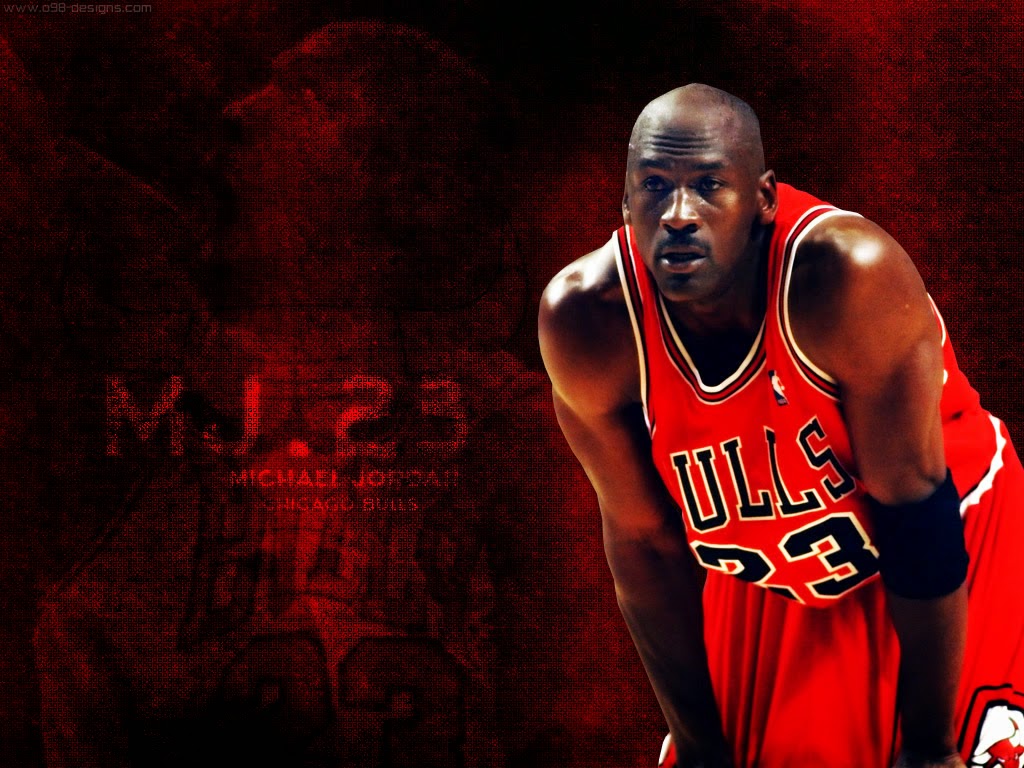
He is Air Jordan. He is the best that ever played the game of basketball. The 1980's saw the birth of two MJ's. The first being Michael Jackson, king of pop music, the other was Michael Jordan, king of the court. There will never be another like him again.He was born Michael Jeffrey Jordan on February 17th, 1963. He is an American former professional basketball player, entrepreneur, and principal owner and chairman of the Charlotte Hornets. His biography on the National Basketball Association (NBA) website states, "By acclamation, Michael Jordan is the greatest basketball player of all time." Jordan was one of the most effectively marketed athletes of his generation and was considered instrumental in popularizing the NBA around the world in the 1980s and 1990s.
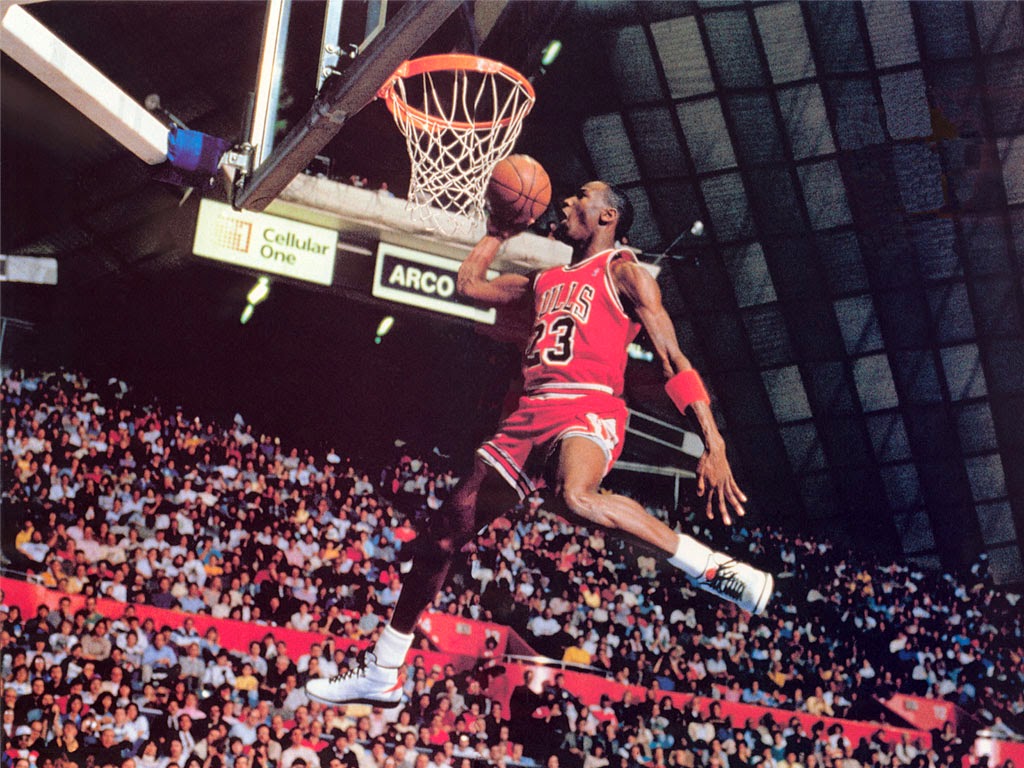
After a three-season career at the University of North Carolina at Chapel Hill, where he was a member of the Tar Heels' national championship team in 1982, Jordan joined the NBA's Chicago Bulls in 1984. He quickly emerged as a league star, entertaining crowds with his prolific scoring. His leaping ability, illustrated by performing slam dunks from the free throw line in slam dunk contests, earned him the nicknames "Air Jordan" and "His Airness". He also gained a reputation for being one of the best defensive players in basketball. In 1991, he won his first NBA championship with the Bulls, and followed that achievement with titles in 1992 and 1993, securing a "three-peat". Although Jordan abruptly retired from basketball before the beginning of the 1993–94 NBA season to pursue a career in baseball, he rejoined the Bulls in 1995 and led them to three additional championships in 1996, 1997, and 1998, as well as an NBA-record 72 regular-season wins in the 1995–96 NBA season. Jordan retired for a second time in 1999, but returned for two more NBA seasons from 2001 to 2003 as a member of the Washington Wizards.
Jordan's individual accolades and accomplishments include five Most Valuable Player (MVP) Awards, ten All-NBA First Team designations, nine All-Defensive First Team honors, fourteen NBA All-Star Game appearances, three All-Star Game MVP Awards, ten scoring titles, three steals titles, six NBA Finals MVP Awards, and the 1988 NBA Defensive Player of the Year Award. Among his numerous accomplishments, Jordan holds the NBA records for highest career regular season scoring average (30.12 points per game) and highest career playoff scoring average (33.45 points per game). In 1999, he was named the greatest North American athlete of the 20th century by ESPN, and was second to Babe Ruth on the Associated Press's list of athletes of the century.
He is a two-time inductee into the Basketball Hall of Fame – in 2009 for his individual career, and in 2010 as a member of the 1992 United States men's Olympic basketball team ("The Dream Team").
Jordan is also known for his product endorsements. He fueled the success of Nike's Air Jordan sneakers, which were introduced in 1985 and remain popular today. Jordan also starred in the 1996 feature film Space Jam as himself. In 2008, he became part-owner and head of basketball operations for the then-Charlotte Bobcats, buying controlling interest in 2010.
Jordan was born in Brooklyn, New York, the son of Deloris (née Peoples), who worked in banking, and James R. Jordan, Sr., an equipment supervisor. His family moved to Wilmington, North Carolina, when he was a toddler. Jordan attended Emsley A. Laney High School in Wilmington, where he anchored his athletic career by playing baseball, football, and basketball. He tried out for the varsity basketball team during his sophomore year, but at 5'11" (1.80 m), he was deemed too short to play at that level. His taller friend, Harvest Leroy Smith, was the only sophomore to make the team.Motivated to prove his worth, Jordan became the star of Laney's junior varsity squad, and tallied several 40-point games. The following summer, he grew four inches and trained rigorously. Upon earning a spot on the varsity roster, Jordan averaged about 20 points per game over his final two seasons of high school play. As a senior, he was selected to the McDonald's All-American Team after averaging a triple-double: 29.2 points, 11.6 rebounds, and 10.1 assists.
Jordan was recruited by numerous college basketball programs, including Duke, North Carolina, South Carolina, Syracuse, and Virginia. In 1981, Jordan accepted a basketball scholarship to North Carolina, where he majored in cultural geography. As a freshman in coach Dean Smith's team-oriented system, he was named ACC Freshman of the Year after he averaged 13.4 points per game (ppg) on 53.4% shooting (field goal percentage). He made the game-winning jump shot in the 1982 NCAA Championship game against Georgetown, which was led by future NBA rival Patrick Ewing. Jordan later described this shot as the major turning point in his basketball career. During his three seasons at North Carolina, he averaged 17.7 ppg on 54.0% shooting, and added 5.0 rebounds per game (rpg). He was selected by consensus to the NCAA All-American First Team in both his sophomore (1983) and junior (1984) seasons. After winning the Naismith and the Wooden College Player of the Year awards in 1984, Jordan left North Carolina one year before his scheduled graduation to enter the 1984 NBA Draft. The Chicago Bulls selected Jordan with the third overall pick, after Hakeem Olajuwon (Houston Rockets) and Sam Bowie (Portland Trail Blazers). One of the primary reasons why Jordan was not drafted sooner was because the first two teams were in need of a center. However, the Trail Blazers general manager Stu Inman contested that it was not a matter of drafting a center, but more a matter of taking Sam Bowie over Jordan, in part because Portland already had a guard with similar skills to Jordan, Clyde Drexler. In 2005 ESPN, citing Bowie's injury-laden college career, named the Blazers' choice of Bowie as the worst draft pick in North American professional sports history. Jordan returned to North Carolina to complete his degree in 1986.
During his first season in the NBA, Jordan averaged 28.2 ppg on 51.5% shooting. He quickly became a fan favorite even in opposing arenas, and appeared on the cover of Sports Illustrated with the heading "A Star Is Born" just over a month into his professional career. Jordan was also voted in as an All-Star starter by the fans in his rookie season. Controversy arose before the All-Star game when word surfaced that several veteran players, led by Isiah Thomas, were upset by the amount of attention Jordan was receiving. This led to a so-called "freeze-out" on Jordan, where players refused to pass him the ball throughout the game.
The controversy left Jordan relatively unaffected when he returned to
regular season play, and he would go on to be voted Rookie of the Year. The Bulls finished the season 38–44, and lost in the first round of the playoffs in four games to the Milwaukee Bucks.Jordan's second season was cut short by a broken foot in the third game of the season, which caused him to miss 64 games. Despite Jordan's injury and a 30–52 record (at the time it was fifth worst record of any team to qualify for the playoffs in NBA history), the Bulls made the playoffs. Jordan recovered in time to participate in the playoffs and performed well upon his return. Against a 1985–86 Boston Celtics team that is often considered one of the greatest in NBA history, Jordan set the still-unbroken record for points in a playoff game with 63 in Game 2. The Celtics, however, managed to sweep the series.
Jordan had recovered completely by the 1986–87 season, and had one of the most prolific scoring seasons in NBA history. He became the only player other than Wilt Chamberlain to score 3,000 points in a season, averaging a league high 37.1 points on 48.2% shooting. In addition, Jordan demonstrated his defensive prowess, as he became the first player in NBA history to record 200 steals and 100 blocks in a season. Despite Jordan's success, Magic Johnson won the league's Most Valuable Player Award. The Bulls reached 40 wins, and advanced to the playoffs for the third consecutive year. However, they were again swept by the Boston Celtics.
In the 1990–91 season, Jordan won his second MVP award after averaging 31.5 ppg on 53.9% shooting, 6.0 rpg, and 5.5 apg for the regular season. The Bulls finished in first place in their division for the first time in 16 years and set a franchise record with 61 wins in the regular season. With Scottie Pippen developing into an All-Star, the Bulls had elevated their play. The Bulls defeated the New York Knicks and the Philadelphia 76ers in the opening two rounds of the playoffs. They advanced to the Eastern Conference Finals where their rival, the Detroit Pistons, awaited them. However, this time the Bulls beat the Pistons in a surprising sweep. In an unusual ending to the fourth and final game, Isiah Thomas led his team off the court before the final seconds had concluded. Most of the Pistons went directly to their locker room instead of shaking hands with the Bulls.
The Bulls advanced to the NBA Finals for the first time in franchise history to face Magic Johnson and James Worthy and beat the Los Angeles Lakers four games to one, compiling an outstanding 15–2 playoff record along the way. Perhaps the best known moment of the series came in Game 2 when, attempting a dunk, Jordan avoided a potential Sam Perkins block by switching the ball from his right hand to his left in mid-air to lay the shot in. In his first Finals appearance, Jordan posted per game averages of 31.2 points on 56% shooting from the field, 11.4 assists, 6.6 rebounds, 2.8 steals and 1.4 blocks. Jordan won his first NBA Finals MVP award, and he cried while holding the NBA Finals trophy.
Jordan and the Bulls continued their dominance in the 1991–92 season, establishing a 67–15 record, topping their franchise record from 1990 to 91. Jordan won his second consecutive MVP award with averages of 30.1 points, 6.4 rebounds and 6.1 assists per game on 52% shooting. After winning a physical 7-game series over the New York Knicks in the second round of the playoffs and finishing off the Cleveland Cavaliers in the Conference Finals in 6 games, the Bulls met Clyde Drexler and the Portland Trail Blazers in the Finals. The media, hoping to recreate a Magic–Bird rivalry, highlighted the similarities between "Air" Jordan and Clyde "The Glide" during the pre-Finals hype. In the first game, Jordan scored a Finals-record 35 points in the first half, including a record-setting six three-point field goals. After the sixth three-pointer, he jogged down the court shrugging as he looked courtside. Marv Albert, who broadcast the game, later stated that it was as if Jordan was saying, "I can't believe I'm doing this." The Bulls went on to win Game 1, and defeat the Blazers in six games. Jordan was named Finals MVP for the second year in a row and finished the series averaging 35.8 ppg, 4.8 rpg, and 6.5 apg, while shooting 53% from the floor.
In 1992–93, despite a 32.6 ppg, 6.7 rpg and 5.5 apg campaign, Jordan's streak of consecutive MVP seasons ended as he lost the award to his friend Charles Barkley. Coincidentally, Jordan and the Bulls met Barkley and his Phoenix Suns in the 1993 NBA Finals. The Bulls captured their third consecutive NBA championship on a game-winning shot by John Paxson and a last-second block by Horace Grant, but Jordan was once again Chicago's catalyst. He averaged a Finals-record 41.0 ppg during the six-game series, and became the first player in NBA history to win three straight Finals MVP awards.
He scored more than 30 points in every game of the series, including 40
or more points in 4 consecutive games. With his third Finals triumph,
Jordan capped off a seven-year run where he attained seven scoring
titles and three championships, but there were signs that Jordan was
tiring of his massive celebrity and all of the non-basketball hassles in
his life.On October 6, 1993, Jordan announced his retirement, citing a loss of desire to play the game. Jordan later stated that the murder of his father earlier in the year shaped his decision. Jordan's father was murdered on July 23, 1993, at a highway rest area in Lumberton, North Carolina, by two teenagers, Daniel Green and Larry Martin Demery. The assailants were traced from calls they made on James Jordan's cellular phone, caught, convicted, and sentenced to life in prison. Jordan was close to his father; as a child he had imitated his father's proclivity to stick out his tongue while absorbed in work. He later adopted it as his own signature, displaying it each time he drove to the basket. In 1996, he founded a Chicago area Boys & Girls Club and dedicated it to his father.
In his 1998 autobiography For the Love of the Game, Jordan wrote that he had been preparing for retirement as early as the summer of 1992. The added exhaustion due to the Dream Team run in the 1992 Olympics solidified Jordan's feelings about the game and his ever-growing celebrity status. Jordan's announcement sent shock waves throughout the NBA and appeared on the front pages of newspapers around the world.
Jordan then further surprised the sports world by signing a minor league baseball contract with the Chicago White Sox on February 7, 1994. He reported to spring training in Sarasota, Florida and was assigned to the team's minor league system on March 31, 1994. Jordan has stated this decision was made to pursue the dream of his late father, who had always envisioned his son as a Major League Baseball player. The White Sox were another team owned by Bulls owner Jerry Reinsdorf, who continued to honor Jordan's basketball contract during the years he played baseball. In 1994, Jordan played for the Birmingham Barons, a Double-A minor league affiliate of the Chicago White Sox, batting .202 with three home runs, 51 runs batted in, 30 stolen bases, and 11 errors. He also appeared for the Scottsdale Scorpions in the 1994 Arizona Fall League, batting .252 against the top prospects in baseball. On November 1, 1994, his number 23 was retired by the Bulls in a ceremony that included the erection of a permanent sculpture known as The Spirit outside the new United Center.
In the 1993–94 season, the Bulls, without Jordan, achieved a 55–27 record, and lost to the New York Knicks in the second round of the playoffs. But the 1994–95 Bulls
were a shell of the championship squad of just two years earlier.
Struggling at mid-season to ensure a spot in the playoffs, Chicago was
31–31 at one point in mid-March. The team received a lift, however, when Jordan decided to return to the NBA for the Bulls.On March 18, 1995, Jordan announced his return to the NBA through a two-word press release: "I'm back." The next day, Jordan donned jersey number 45 (his number with the Barons), as his familiar 23 had been retired in his honor following his first retirement. He took to the court with the Bulls to face the Indiana Pacers in Indianapolis, scoring 19 points. The game had the highest Nielsen rating of a regular season NBA game since 1975.
Although he had not played an NBA game in a year and a half, Jordan played well upon his return, making a game-winning jump shot against Atlanta in his fourth game back. He then scored 55 points in the next game against the Knicks at Madison Square Garden on March 28, 1995 (his first appearance at Madison Square Garden since retiring). Boosted by Jordan's comeback, the Bulls went 13–4 to make the playoffs and advanced to the Eastern Conference Semifinals against the Orlando Magic. At the end of Game 1, Orlando's Nick Anderson stripped Jordan from behind, leading to the game-winning basket for the Magic; he would later comment that Jordan "didn't look like the old Michael Jordan." Jordan then returned to wearing his old number. Jordan averaged 31 points per game in the series, but Orlando prevailed in 6 games.
Freshly motivated by the playoff defeat, Jordan trained aggressively for the 1995–96 season. Strengthened by the addition of rebound specialist Dennis Rodman, the Bulls dominated the league, starting the season 41–3, and eventually finishing with the best regular season record in NBA history: 72–10. Jordan led the league in scoring with 30.4 ppg, and won the league's regular season and All-Star Game MVP awards. In the playoffs, the Bulls lost only three games in four series, defeating the Seattle SuperSonics in the NBA Finals to win the championship. Jordan was named Finals MVP for a record fourth time, surpassing Magic Johnson's three Finals MVP awards. He also achieved only the second sweep of the MVP Awards in the All-Star Game, regular season and NBA Finals, Willis Reed having achieved the first, during the 1969–70 season. Because this was Jordan's first championship since his father's murder, and it was won on Father's Day, Jordan reacted very emotionally upon winning the title, including a memorable scene of him sobbing on the locker room floor with the game ball.
In the 1996–97 season, the Bulls started out 69–11, but narrowly missed out on a second consecutive 70-win season by losing their final two games to finish 69–13. However, this year Jordan was beaten for the NBA MVP Award by Karl Malone. The Bulls again advanced to the Finals, where they faced Malone and the Utah Jazz. The series against the Jazz featured two of the more memorable clutch moments of Jordan's career. He won Game 1 for the Bulls with a buzzer-beating jump shot. In Game 5, with the series tied at 2, Jordan played despite being feverish and dehydrated from a stomach virus. In what is known as the "Flu Game", Jordan scored 38 points, including the game-deciding 3-pointer with 25 seconds remaining. The Bulls won 90–88 and went on to win the series in six games. For the fifth time in as many Finals appearances, Jordan received the Finals MVP award. During the 1997 NBA All-Star Game, Jordan posted the first triple double in All-Star Game history in a victorious effort; however, he did not receive the MVP award.
Jordan and the Bulls compiled a 62–20 record in the 1997–98 season. Jordan led the league with 28.7 points per game,
securing his fifth regular-season MVP award, plus honors for All-NBA
First Team, First Defensive Team and the All-Star Game MVP.
The Bulls captured the Eastern Conference Championship for a third
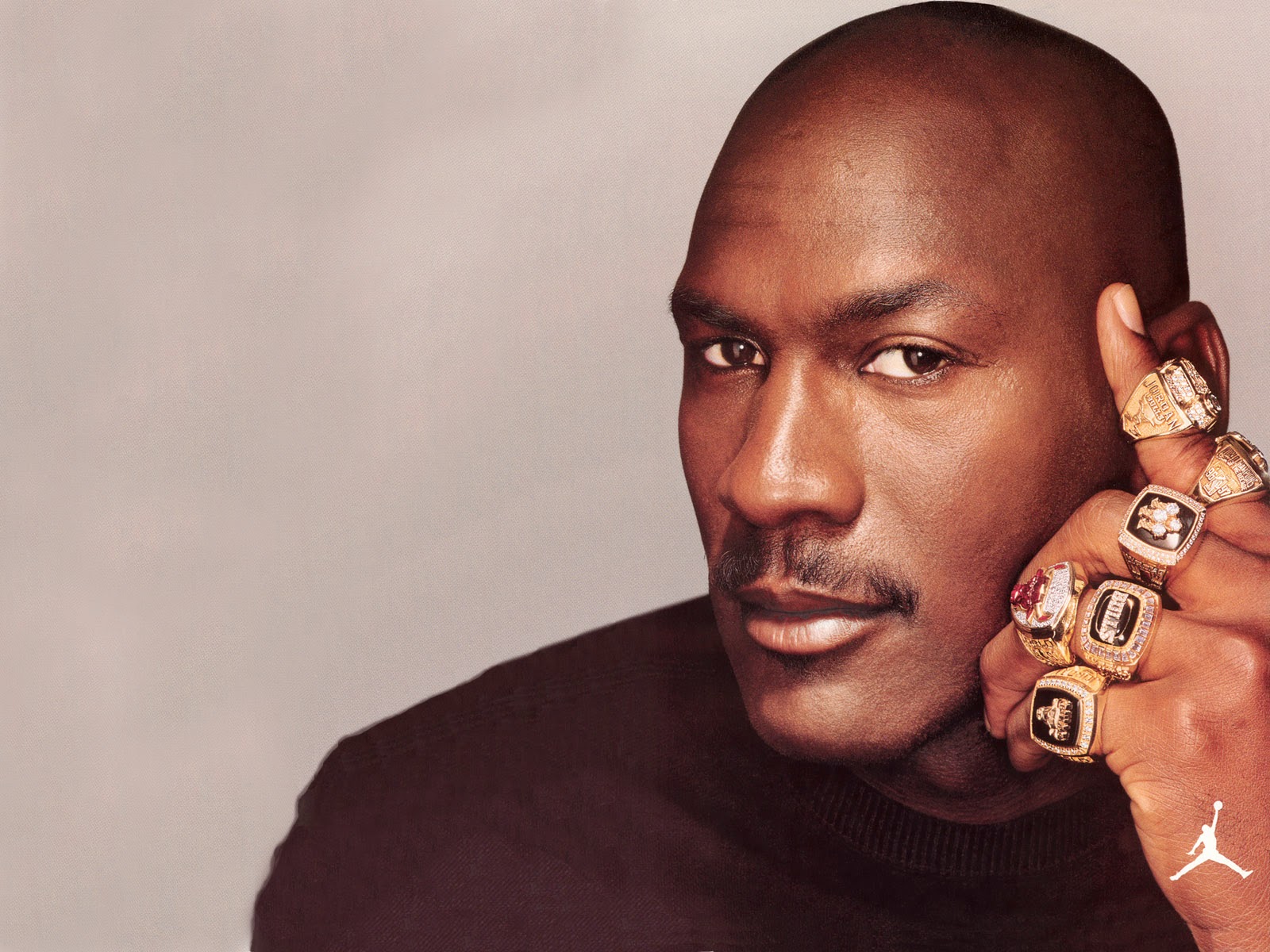
straight season, including surviving a grueling seven-game series with Reggie Miller's Indiana Pacers in the Eastern Conference Finals; it was the first time Jordan had played in a Game 7 since the 1992 series with the Knicks. After prevailing, they moved on for a rematch with the Jazz in the Finals.The Bulls returned to Utah for Game 6 on June 14, 1998 leading the series 3–2. Jordan executed a series of plays, considered to be one of the greatest clutch performances in NBA Finals history. With the Bulls trailing 86–83 with 41.9 seconds remaining, Phil Jackson called a timeout. When play resumed, Jordan received the inbound pass, drove to the basket, and hit a layup over several Jazz defenders. The Jazz brought the ball upcourt and passed the ball to forward Karl Malone, who was set up in the low post and was being guarded by Rodman. Malone jostled with Rodman and caught the pass, but Jordan cut behind him and swatted the ball out of his hands for a steal. Jordan then slowly dribbled upcourt and paused at the top of the key, eyeing his defender, Jazz guard Bryon Russell. With 10 seconds remaining, Jordan started to dribble right, then crossed over to his left, possibly pushing off Russell, although the officials did not call a foul. With 5.2 seconds left, Jordan made the climactic jump shot of his career. After John Stockton missed a desperation 3-pointer, Jordan and the Bulls claimed their sixth NBA championship, and secured a second three-peat. Once again, Jordan was voted the Finals MVP, having led all scorers by averaging 33.5 points per game, including 45 in the deciding Game 6. Jordan's six Finals MVPs is a record; Shaquille O'Neal, Magic Johnson, and Tim Duncan are tied for second place with three apiece.
The 1998 Finals holds the highest television rating of any Finals series in history, and Game 6 holds the highest television rating of any game in NBA history.
With Phil Jackson's contract expiring, the pending departures of Scottie Pippen (who stated his desire to be traded during the season) and Dennis Rodman (who would sign with the Los Angeles Lakers as a free agent) looming, and being in the latter stages of an owner-induced lockout of NBA players, Jordan retired for the second time on January 13, 1999.
On January 19, 2000, Jordan returned to the NBA not as a player, but as part owner and President of Basketball Operations for the Washington Wizards. Jordan's responsibilities with the Wizards were comprehensive. He controlled all aspects of the Wizards' basketball operations, and had the final say in all personnel matters. Opinions of Jordan as a basketball executive were mixed. He managed to purge the team of several highly paid, unpopular players (such as forward Juwan Howard and point guard Rod Strickland), but used the first pick in the 2001 NBA Draft to select high schooler Kwame Brown, who did not live up to expectations and was traded away after four seasons.
Despite his January 1999 claim that he was "99.9% certain" that he would never play another NBA game, in the summer of 2001 Jordan expressed interest in making another comeback, this time with his new team. Inspired by the NHL comeback of his friend Mario Lemieux the previous winter,
Jordan spent much of the spring and summer of 2001 in training, holding
several invitation-only camps for NBA players in Chicago. In addition, Jordan hired his old Chicago Bulls head coach, Doug Collins, as Washington's coach for the upcoming season, a decision that many saw as foreshadowing another Jordan return.On September 25, 2001, Jordan announced his return to the NBA to play for the Washington Wizards, indicating his intention to donate his salary as a player to a relief effort for the victims of the September 11, 2001 attacks. In an injury-plagued 2001–02 season, he led the team in scoring (22.9 ppg), assists (5.2 apg), and steals (1.42 spg). However, torn cartilage in his right knee ended Jordan's season after only 60 games, the fewest he had played in a regular season since playing 17 games after returning from his first retirement during the 1994–95 season.
Playing in his 14th and final NBA All-Star Game in 2003, Jordan passed Kareem Abdul-Jabbar as the all-time leading scorer in All-Star game history (a record since broken by Kobe Bryant). That year, Jordan was the only Washington player to play in all 82 games, starting in 67 of them. He averaged 20.0 points, 6.1 rebounds, 3.8 assists, and 1.5 steals per game. He also shot 45% from the field, and 82% from the free throw line. Even though he turned 40 during the season, he scored 20 or more points 42 times, 30 or more points nine times, and 40 or more points three times. On February 21, 2003, Jordan became the first 40-year-old to tally 43 points in an NBA game. During his stint with the Wizards, all of Jordan's home games at the MCI Center were sold out, and the Wizards were the second most-watched team in the NBA, averaging 20,172 fans a game at home and 19,311 on the road. However, neither of Jordan's final two seasons resulted in a playoff appearance for the Wizards, and Jordan was often unsatisfied with the play of those around him.
Jordan played on two Olympic gold medal-winning American basketball teams. As a college player he participated, and won the gold, in the 1984 Summer Olympics. The team was coached by Bob Knight and featured players such as Patrick Ewing, Sam Perkins, Chris Mullin, Steve Alford, and Wayman Tisdale. Jordan led the team in scoring, averaging 17.1 ppg for the tournament.
In the 1992 Summer Olympics, he was a member of the star-studded squad that included Magic Johnson, Larry Bird, and David Robinson and was dubbed the "Dream Team". Jordan was the only player to start all 8 games in the Olympics. Playing limited minutes due to the frequent blowouts, Jordan averaged 14.9 ppg, finishing second on the team in scoring. Jordan and fellow Dream Team members Patrick Ewing and Chris Mullin are the only American men's basketball players to win Olympic gold as amateurs and professionals.
After his third retirement, Jordan assumed that he would be able to return to his front office position of Director of Basketball Operations with the Wizards. However, his previous tenure in the Wizards' front office had produced the aforementioned mixed results and may have also influenced the trade of Richard "Rip" Hamilton for Jerry Stackhouse (although Jordan was not technically Director of Basketball Operations in 2002). On May 7, 2003, Wizards owner Abe Pollin fired Jordan as Washington's President of Basketball Operations. Jordan later stated that he felt betrayed, and that if he knew he would be fired upon retiring he never would have come back to play for the Wizards.
On June 15, 2006, Jordan bought a minority stake in the Charlotte Bobcats, becoming the team's second-largest shareholder behind majority owner Robert L. Johnson. As part of the deal, Jordan was named "Managing Member of Basketball Operations," with full control over the basketball side of the operation. Despite Jordan's previous success as an endorser, he has made an effort not to be included in Charlotte's marketing campaigns. A decade earlier, Jordan had made a bid to become part-owner of Charlotte's original NBA team, the Charlotte Hornets, but talks collapsed when owner George Shinn refused to give Jordan complete control of basketball operations.
In February 2010, it was reported that Jordan was seeking majority ownership of the Bobcats. As February wore on, it emerged that the leading contenders for the team were Jordan and former Houston Rockets president George Postolos. On February 27, the Bobcats announced that Johnson had reached an agreement with Jordan and his group, MJ Basketball Holdings, to buy the team pending NBA approval. On March 17, the NBA Board of Governors unanimously approved Jordan's purchase, making him the first former player ever to become the majority owner of an NBA team. It also made him the league's only African-American majority owner.
Sources: Wikipedia
This work released through CC 3.0 BY-SA - Creative Commons
Wednesday, June 18, 2014
Harry Houdini: Legends
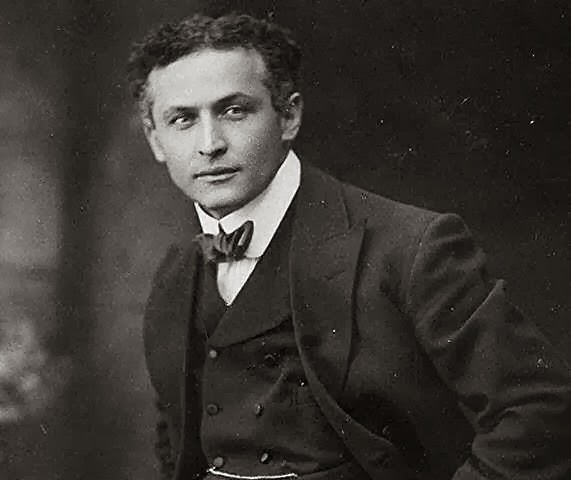
Harry Houdini (born Erik Weisz in Budapest, later Ehrich Weiss, Harry Weiss, or Harry Weiß; March 24, 1874 – October 31, 1926) was a Hungarian-American illusionist and stunt performer, noted for his sensational escape acts. He first attracted notice as "Harry Handcuff Houdini" on a tour of Europe, where he challenged police forces to keep him locked up. Soon he extended his repertoire to include chains, ropes slung from skyscrapers, straitjackets under water, and having to hold his breath inside a sealed milk can.In 1904, thousands watched as he tried to escape from special handcuffs commissioned by London's Daily Mirror, keeping them in suspense for an hour. Another stunt saw him buried alive and only just able to claw himself to the surface, emerging in a state of near-breakdown. While many suspected that these escapes were faked, Houdini presented himself as the scourge of fake magicians and spiritualists. As President of the Society of American Magicians, he was keen to uphold professional standards and expose fraudulent artists. He was also quick to sue anyone who pirated his escape stunts.
Houdini made several movies, but quit acting when it failed to bring in money. He was also a keen aviator, and aimed to become the first man to fly a plane in Australia. Even the circumstances of his death in 1926 were dramatic and mysterious.
Harry Houdini was born as Erik Weisz in Budapest, Austria-Hungary, on March 24, 1874. His parents were Rabbi Mayer Sámuel Weisz (1829–1892), and Cecília Weisz (née Steiner; 1841–1913). Houdini was one of seven children: Herman M. (1863–1885) who was Houdini's half-brother, by Rabbi Weisz's first marriage; Nathan J. (1870–1927); Gottfried William (1872–1925); Theodore "Theo" (1876–1945); Leopold D. (1879–1962); and Carrie Gladys (born 1882–1959) who was left almost blind after an accident that occurred during her childhood.
Weisz arrived in the United States on July 3, 1878, on the SS Fresia with his mother (who was pregnant) and his four brothers. The family changed the Hungarian spelling of their German surname to Weiss (the German spelling) and Erik's name was changed to Ehrich. Friends called him "Ehrie" or "Harry".They first lived in Appleton, Wisconsin, where his father served as Rabbi of the Zion Reform Jewish Congregation.
According to the 1880 census, the family lived on Appleton Street. On June 6, 1882, Rabbi Weiss became an American citizen. Losing his tenure at Zion in 1887, Rabbi Weiss moved with Ehrich to New York City, where they lived in a boarding house on East 79th Street. He was joined by the rest of the family once Rabbi Weiss found permanent housing. As a child, Ehrich Weiss took several jobs, making his public début as a 9-year-old trapeze artist, calling himself "Ehrich, the Prince of the Air". He was also a champion cross country runner in his youth. Weiss became a professional magician and began calling himself "Harry Houdini".
After extensive research, Houdini published a book in 1908 called The Unmasking of Robert-Houdin, in which he called his former idol Jean Eugène Robert-Houdin a liar and a fraud for having claimed the invention of automata and effects such as aerial suspension which had been in existence for many years.
In later life, Houdini claimed that the first part of his new name, Harry, was an homage to Harry Kellar, whom Houdini admired.
Houdini was an active Freemason and was a member of St. Cecile Lodge #568 in New York City
In 1918, he registered for selective service as Harry Handcuff Houdini.
He began his magic career in 1891. He had little success. He performed in dime museums and sideshows, and even doubled as "The Wild Man" at a circus. Houdini focused initially on traditional card tricks. At one point, he billed himself as the "King of Cards". He soon began experimenting with escape acts.In 1893, while performing with his brother "Dash" (Theodore) at Coney Island as "The Brothers Houdini," Harry met a fellow performer, Wilhelmina Beatrice "Bess" Rahner. Bess was initially courted by Dash, but she and Houdini married in 1894, with Bess replacing Dash in the act, which became known as "The Houdinis." For the rest of Houdini's performing career, Bess worked as his stage assistant.
Houdini's big break came in 1899 when he met manager Martin Beck in rural Woodstock, Illinois. Impressed by Houdini's handcuffs act, Beck advised him to concentrate on escape acts and booked him on the Orpheum vaudeville circuit. Within months, he was performing at the top vaudeville houses in the country. In 1900, Beck arranged for Houdini to tour Europe. After some days of unsuccessful interviews in London, Houdini managed to interest Dundas Slater, then manager of the Alhambra Theatre. He gave a demonstration of escape from handcuffs at Scotland Yard, and succeeded in baffling the police so effectively that he was booked at the Alhambra for six months.
Houdini became widely known as "The Handcuff King." He toured England, Scotland, the Netherlands, Germany, France, and Russia. In each city, Houdini challenged local police to restrain him with shackles and lock him in their jails. In many of these challenge escapes, Houdini was first stripped nude and searched. In Moscow, Houdini escaped from a Siberian prison transport van. Houdini claimed that, had he been unable to free himself, he would have had to travel to Siberia, where the only key was kept. In Cologne, he sued a police officer, Werner Graff, who alleged that he made his escapes via bribery. Houdini won the case when he opened the judge's safe (he later said the judge had forgotten to lock it). With his new-found wealth, Houdini purchased a dress said to have been made for Queen Victoria. He then arranged a grand reception where he presented his mother in the dress to all their relatives. Houdini said it was the happiest day of his life. In 1904, Houdini returned to the U.S. and purchased a house for $25,000, a brownstone at 278 W. 113th Street in Harlem, New York City.
From 1907 and throughout the 1910s, Houdini performed with great success in the United States. He freed himself from jails, handcuffs, chains, ropes, and straitjackets, often while hanging from a rope in sight of street audiences. Because of imitators, on January 25, 1908, Houdini put his "handcuff act" behind him and began escaping from a locked, water-filled milk can. The possibility of failure and death thrilled his audiences. Houdini also expanded his repertoire with his escape challenge act, in which he invited the public to devise contraptions to hold him. These included nailed packing crates (sometimes lowered into water), riveted boilers, wet sheets, mailbags, and even the belly of a whale that had washed ashore in Boston. Brewers in Scranton, Pennsylvania and other cities challenged Houdini to escape from a barrel after they filled it with beer.
Many of these challenges were pre-arranged with local merchants in one of the first uses of mass tie-in marketing. Rather than promote the idea that he was assisted by spirits, as did the Davenport Brothers and others, Houdini's advertisements showed him making his escapes via dematerializing, although Houdini himself never claimed to have supernatural powers.In 1912, Houdini introduced perhaps his most famous act, the Chinese Water Torture Cell, in which he was suspended upside-down in a locked glass-and-steel cabinet full to overflowing with water. The act required that Houdini hold his breath for more than three minutes. Houdini performed the escape for the rest of his career. During his career, Houdini explained some of his tricks in books written for the magic brotherhood. In Handcuff Secrets (1909), he revealed how many locks and handcuffs could be opened with properly applied force, others with shoestrings. Other times, he carried concealed lockpicks or keys, being able to regurgitate small keys at will. When tied down in ropes or straitjackets, he gained wiggle room by enlarging his shoulders and chest, moving his arms slightly away from his body, and then dislocating his shoulders.
His straitjacket escape was originally performed behind curtains, with him popping out free at the end. Houdini's brother, (who was also an escape artist, billing himself as Theodore Hardeen), discovered that audiences were more impressed when the curtains were eliminated so they could watch him struggle to get out. For publicity, on more than one occasion, they both performed straitjacket escapes while dangling upside-down from the roof of a building.
For most of his career, Houdini was a headline act in vaudeville. For many years, he was the highest-paid performer in American vaudeville. One of Houdini's most notable non-escape stage illusions was performed at New York's Hippodrome Theater, when he vanished a full-grown elephant (with its trainer) from the stage, beneath which was a swimming pool. In 1923, Houdini became president of Martinka & Co., America's oldest magic company. The business is still in operation today.
In 1904, the London Daily Mirror newspaper challenged Houdini to escape from special handcuffs that it claimed had taken Nathaniel Hart, a locksmith from Birmingham, five years to make. Houdini accepted the challenge for March 17 during a matinée performance at London's Hippodrome theater. It was reported that 4000 people and more than 100 journalists turned out for the much-hyped event. The escape attempt dragged on for over an hour, during which Houdini emerged from his "ghost house" (a small screen used to conceal the method of his escape) several times. On one occasion he asked if the cuffs could be removed so he could take off his coat. The Mirror representative, Frank Parker, refused, saying Houdini could gain an advantage if he saw how the cuffs were unlocked. Houdini promptly took out a pen-knife and, holding the knife in his teeth, used it to cut his coat from his body. Some 56 minutes later, Houdini's wife appeared on stage and gave him a kiss. It is believed that in her mouth was the key to unlock the special handcuffs. Houdini then went back behind the curtain. After an hour and ten minutes, Houdini emerged free. As he was paraded on the shoulders of the cheering crowd, he broke down and wept. Houdini later said it was the most difficult escape of his career.In 1901, Houdini introduced his own original act, the Milk Can Escape. In this act, Houdini was handcuffed and sealed inside an over-sized milk can filled with water and made his escape behind a curtain. As part of the effect, Houdini invited members of the audience to hold their breath along with him while he was inside the can. Advertised with dramatic posters that proclaimed "Failure Means A Drowning Death," the escape proved to be a sensation. Houdini soon modified the escape to include the milk can being locked inside a wooden chest, being chained or padlocked, and even inside another milk can. Houdini performed the milk can escape as a regular part of his act for only four years, but it has remained one of the acts most associated with him. Houdini's brother, Theodore Hardeen, continued to perform the milk can (and the wooden chest variation) into the 1940s.
In 1912, the vast number of imitators prompted Houdini to replace his Milk Can act with the Chinese Water Torture Cell. In this escape, Houdini's feet were locked in stocks, and he was lowered upside down into a tank filled with water. The mahogany and metal cell featured a glass front, through which audiences could clearly see Houdini. The stocks were locked to the top of the cell, and a curtain concealed his escape. In the earliest version of the Torture Cell, a metal cage was lowered into the cell, and Houdini was enclosed inside that. While making the escape more difficult (the cage prevented Houdini from turning), the cage bars also offered protection should the front glass break. The original cell was built in England, where Houdini first performed the escape for an audience of one person as part of a one-act play he called "Houdini Upside Down." This was so he could copyright the effect and have grounds to sue imitators (which he did). While the escape was advertised as "The Chinese Water Torture Cell" or "The Water Torture Cell," Houdini always referred to it as "the Upside Down" or "USD". The first public performance of the USD was at the Circus Busch in Berlin, on September 21, 1912. Houdini continued to perform the escape until his death in 1926.
One of Houdini's most popular publicity stunts was to have himself strapped into a regulation straitjacket and suspended by his ankles from a tall building or crane. Houdini would then make his escape in full view of the assembled crowd. In many cases, Houdini drew thousands of onlookers who brought city traffic to a halt. Houdini would sometimes ensure press coverage by performing the escape from the office building of a local newspaper. In New York City, Houdini performed the suspended straitjacket escape from a crane being used to build the New York subway. After flinging his body in the air, he escaped from the straitjacket. Starting from when he was hoisted up in the air by the crane, to when the straitjacket was completely off, it took him two minutes and thirty-seven seconds. There is film footage in the Library of Congress of Houdini performing the escape. After being battered against a building in high winds during one escape, Houdini performed the escape with a visible safety wire on his ankle so that he could be pulled away from the building if necessary. The idea for the upside-down escape was given to Houdini by a young boy named Randolph Osborne Douglas (March 31, 1895 – December 5, 1956), when the two met at a performance at Sheffield's Empire Theatre.Another of Houdini's most famous publicity stunts was to escape from a nailed and roped packing crate after it had been lowered into water. Houdini first performed the escape in New York's East River on July 7, 1912. Police forbade him from using one of the piers, so Houdini hired a tugboat and invited press on board. Houdini was locked in handcuffs and leg-irons, then nailed into the crate which was roped and weighed down with two hundred pounds of lead. The crate was then lowered into the water. Houdini escaped in fifty-seven seconds. The crate was pulled to the surface and found still to be intact, with the manacles inside. Houdini performed this escape many times, and even performed a version on stage, first at Hamerstein's Roof Garden (where a 5,500-gallon tank was specially built), and later at the New York Hippodrome.
Houdini performed at least three variations on a "Buried Alive" stunt during his career. The first was near Santa Ana, California in 1915, and it almost cost Houdini his life. Houdini was buried, without a casket, in a pit of earth six feet deep. He became exhausted and panicked while trying to dig his way to the surface and called for help. When his hand finally broke the surface, he fell unconscious and had to be pulled from the grave by his assistants. Houdini wrote in his diary that the escape was "very dangerous" and that "the weight of the earth is killing.
In 1906 Houdini started showing films of his outside escapes as part of his vaudeville act. In Boston he presented a short film called Houdini Defeats Hackenschmidt. Georg Hackenschmidt was a famous wrestler of the day, but the nature of their contest is unknown as the film is lost. In 1909 Houdini made a film in Paris for Cinema Lux titled Merveilleux Exploits du Célébre Houdini à Paris (Marvellous Exploits of the Famous Houdini in Paris). It featured a loose narrative designed to showcase several of Houdini's famous escapes, including his straitjacket and underwater handcuff escapes. That same year Houdini got an offer to star as Captain Nemo in a silent version of 20,000 Leagues Under the Sea, but the project never made it into production.In 1918 Houdini signed a contract with film producer B.A. Rolfe to star in a 15-part serial, The Master Mystery (released in January 1919). As was common at the time, the film serial was released simultaneously with a novel. Financial difficulties resulted in B.A. Rolfe Productions going out of business, but The Master Mystery led to Houdini being signed by Famous Players-Lasky Corporation/Paramount Pictures, for whom he made two pictures, The Grim Game (1919) and Terror Island (1920).
Neither Houdini's acting career nor FDC found success, and he gave up on the movie business in 1923, complaining that "the profits are too meager". His celebrity was such that, years later, he was given a star on the Hollywood Walk of Fame (at 7001 Hollywood Blvd).
The eyewitnesses, students named Jacques Price and Sam Smilovitz (sometimes called Jack Price and Sam Smiley), proffered accounts of the incident that generally corroborated one another. Price describes Whitehead asking Houdini "whether it was true that punches in the stomach did not hurt him", and after securing Houdini's permission to strike him, delivering "some very hammer-like blows below the belt". Houdini was reclining on a couch at the time, having broken his ankle while performing several days earlier. Price states that Houdini winced at each blow and stopped Whitehead suddenly in the midst of a punch, gesturing that he had had enough, and adding that he had had no opportunity to prepare himself against the blows, as he did not expect Whitehead to strike him so suddenly and forcefully. Had his ankle not been broken, he would have risen from the couch into a better position to brace himself.
Throughout the evening, Houdini performed in great pain. He was unable to sleep and remained in constant pain for the next two days, but did not seek medical help. When he finally saw a doctor, he was found to have a fever of 102 °F (38.9 °C) and acute appendicitis, and advised to have immediate surgery. He ignored the advice and decided to go on with the show. When Houdini arrived at the Garrick Theater in Detroit, Michigan, on October 24, 1926, for his last performance, he had a fever of 104 °F (40 °C). Despite the diagnosis, Houdini took the stage. He was reported to have passed out during the show, but was revived and continued. Afterwards, he was hospitalized at Detroit's Grace Hospital.
Harry Houdini died of peritonitis, secondary to a ruptured appendix at 1:26 p.m. in Room 401 on October 31, aged 52. In his final days, he optimistically held to a strong belief that he would recover, but his last words before dying were reportedly, "I'm tired of fighting.". Eyewitnesses to an incident at Houdini's dressing room in the Princess Theatre in Montreal gave rise to speculation that Houdini's death was caused by a McGill University student, J. Gordon Whitehead, who delivered a surprise attack of multiple blows to Houdini's abdomen.
After taking statements from Price and Smilovitz, Houdini's insurance company concluded that the death was due to the dressing-room incident and paid double indemnity
Houdini's funeral was held on November 4, 1926 in New York, with more than 2,000 mourners in attendance. He was interred in the Machpelah Cemetery in Glendale, Queens, New York, with the crest of the Society of American Magicians inscribed on his gravesite. A statuary bust was added to the exedra in 1927, a rarity, because graven images are forbidden in nearly all Jewish cemeteries. In 1975 the bust was knocked over and destroyed. Temporary busts were placed at the gravesite until 2011 when a group who came to be called The Houdini Commandos from the Houdini Museum in Scranton, Pennsylvania placed a permanent bust with the permission of Houdini's family and of the cemetery. For a time, the Society of American Magicians took responsibility for the upkeep of the gravesite, as Houdini had willed a large sum of money to the organization he had grown from one club to its present-day 5,000-6,000 dues-paying membership worldwide. This upkeep was abandoned by the society's dean George Schindler, who said "the operator of the cemetery, David Jacobson, sends us a bill for upkeep every year but we never pay it."Machpelah Cemetery operator Jacobson said, "The Society of American Magicians never paid the cemetery for any restoration of the Houdini family plot in my tenure since 1988," claiming that the money came from the cemetery's dwindling funds. The granite monuments of Houdini's sister, Gladys, and brother, Leopold, are missing.
The Houdini gravesite is no longer cared for by the Society of American Magicians, but by The Houdini Museum in Scranton, Pennsylvania.
To this day the society holds a broken wand ceremony at the gravesite each November. Houdini's widow, Bess, died of a heart attack on February 11, 1943, aged 67, in Needles, California while on a train en route from Los Angeles to New York City. She had expressed a wish to be buried next to her husband, but instead was interred at the Gate of Heaven Cemetery in Westchester County, New York, as her Catholic family refused to allow her to be buried in a Jewish cemetery.
Sources: Wikipedia
This work released through CC 3.0 BY-SA - Creative Commons
Subscribe to:
Posts (Atom)