In 1881, at the beginning of the Mahdist Revolt, the Mahdi Muhammad Ahmad appointed Abdallahi ibn Muhammad as one of his four caliphs (Khalifa) and handed him a black flag. Abdallahi used his black flag to recruit Baggara Arabs and other tribes from the west. The other caliphs used differently colored flags. The black horizontal stripe in the current Sudanese flag is a reference to this Mahdist-era black flag.
Between 1899 and 1956, Anglo-Egyptian Sudan was administered jointly as a condominium by Egypt and the United Kingdom. The condominium did not have its own flag; instead the flag of Egypt and the flag of the United Kingdom were always flown together, with the British flag taking precedence.
A flag did exist as a rank flag for the British Governor General of the Sudan. In common with the rank flags of governors and commissioners of other British overseas territories, it consisted of a Union Flag defaced with a white disk bearing the territory's badge or coat of arms, surrounded by a wreath of laurel. As no badge or coat of arms existed for Anglo-Egyptian Sudan, the disk instead contained the words "GOVERNOR GENERAL OF THE SUDAN.
Upon independence from Egypt and the United Kingdom on 1 January 1956, Sudan adopted a blue-yellow-green tricolor as its national flag. This flag remained in use until 1970, when the current flag was adopted. The colours of the flag represented the River Nile (blue), the Sahara Desert (yellow) and farmlands (green). They were chosen as they were neutral between ethnic groups and political parties.
The flag of Sudan (Arabic: علم السودان) was adopted on May 20, 1970, and consists of a horizontal red-white-black tricolor, with a green triangle at the hoist. The flag is based on the Arab Liberation Flag shared by Egypt, Iraq, Syria, and Yemen, that uses a subset of the Pan-Arab colors in which green is less significant. Prior to the 1969 military coup of Gaafar Nimeiry, a blue-yellow-green tricolor design was used.
Red, white, black and green are called the pan-Arab colors and have been historically linked to the Arab people and Islamic religion for centuries. The colors stand for Arab unity and independence. The red stripe represents Sudan's struggle for independence and many other struggles, and the sacrifices of the country's martyrs. The white represents peace, light and optimism. It also represents the White Flag League which was a nationalist group that rose up against colonial rule in 1924. The black represents Sudan; in Arabic 'Sudan' means black. It also represents the black flag of nationalists who fought colonial rule during the Mahdist Revolution, late in 19th century. Green represents Islam, agriculture and the prosperity of the land.
There's a lot of people out there who have never heard of Greg Guidry, I'm sure, but for a songwriter such as myself, I know exactly who Greg Guidry is. Or should I say, was?
Gregory M. Guidry was born January 23, 1950 and died July 28, 2003. He is better known as Greg Guidry and he was an American singer-songwriter.
Born in St. Louis, Missouri, he played piano and sang gospel as a child, and sang in a band with future Doobie Brother Michael McDonald as a teenager. He signed a publishing contract with CBS Records in 1977 and wrote songs for Climax Blues Band, Robbie Dupree, Exile, Johnny Taylor, Sawyer Brown, and Reba McEntire.
In 1981 he sang as a backing vocalist for the Allman Brothers Band on their 1981 album Brothers of the Road. He signed with Columbia in 1982 and released an album, Over the Line, which produced two hit singles, "Goin' Down" (US #17, US AC #11) and a duet with his sister Sandy, "Into My Love" (US #92).
While he continued to do songwriting work later in the 1980s, he did not issue a follow-up album until 2000, when Soul'd Out and Private Session were released, and his debut album was re-released.
On July 28, 2003, Guidry died in a fire at age 53. His charred body was found in a car parked in his garage in Fairview, Tennessee. His death was ruled a suicide.
It is in my opinion that his first album, "Over The Line" was highly underrated. I remember seeing it in the ship PX one day and without knowing who he really was at that time, I bought it. I played that cassette over and over until it couldn't be played anymore.
I then took it upon myself to learn more about him and before I knew it, I was a fan of Greg Guidry the songwriter more than I was of him as a singer or performer.
Truth be told, I always thought I would model my songwriting career pretty much like his, which was under the radar, but to this point, that hasn't been the case.
Still, I envy the soulful approach he took for all of his songs. After his debut album, "Over The Line", it was believed his career would take off like a rocket, but that never materialized. I think that is a shame because Greg Guidry could write.
While it's unclear why his songwriting / singing / music career never took off, I like to think it was his mental health issues that may have gotten in the way. It's easy to see that he suffered from depression. I don't know if he ever got officially diagnosed or if he even was aware of it, but suicide is a tell-tell sign of possible mental health issues.
What he does leave behind though is really good music. His potential may not have been reached, but what he did do was just freaking awesome. I can only hope that people will think as much about my music someday as they do about his.
It's also a reminder that we really need to take mental health more seriously. I know for myself, I have suffered from bi-polar depression and suicidal thoughts ever since my first suicide attempt when I was 17 years old. It took a long time before I was ever diagnosed. Perhaps if Greg was diagnosed and got treatment, he would still be with us, and writing more good songs. God knows we could use some good new songs these days. My head, heart and stomach can only tolerate so much of this crap that is getting stuffed down our throats anymore. Seriously, today's music, 90 percent of it I just don't get. The lyrics sound okay but the music is garbage. Only a handful of songs are worth the cost of downloading. At the risk of sounding like my grandfather but, today's music really lacks a lot of emotion and or meaning. It's just crap. Many tell no story. But this post isn't about that, it's about a songwriter that was instrumental in inspiring me to want to be a songwriter. It's about the legacy of Greg Guidry. A legacy that goes on practically unnoticed and unrealized.


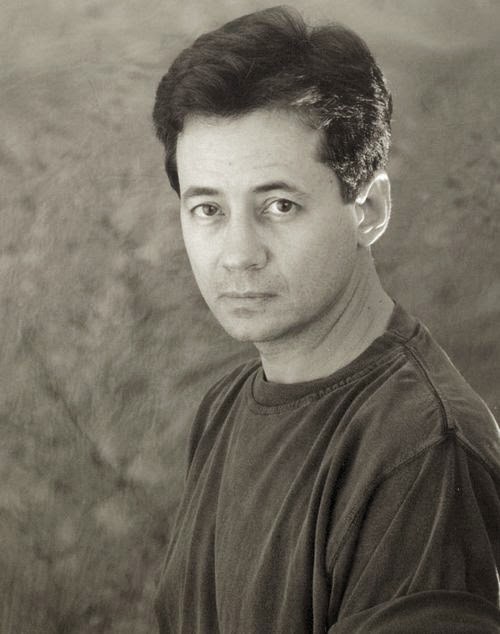 There's a lot of people out there who have never heard of Greg Guidry, I'm sure, but for a songwriter such as myself, I know exactly who Greg Guidry is. Or should I say, was?
 While he continued to do songwriting work later in the 1980s, he did not issue a follow-up album until 2000, when Soul'd Out and Private Session were released, and his debut album was re-released.
 Truth be told, I always thought I would model my songwriting career pretty much like his, which was under the radar, but to this point, that hasn't been the case.
 What he does leave behind though is really good music. His potential may not have been reached, but what he did do was just freaking awesome. I can only hope that people will think as much about my music someday as they do about his.
