 Lester Joseph Gillis
 (December 6, 1908 – November 27, 1934), known under the pseudonym
George Nelson, was a bank robber and murderer in the 1930s. Gillis was better known as
Baby Face Nelson, a name given to him due to his youthful appearance and small stature. Usually referred to by criminal associates as "Jimmy". Nelson entered into a partnership with John Dillinger, helping him escape from prison in the famed Crown Point, Indiana Jail escape, and was later labeled along with the remaining gang members as public enemy number one.
Nelson was responsible for the murder of several people, and has the dubious distinction of having killed more FBI agents in the line of duty than any other person. Nelson was shot by FBI agents and died after a shootout often termed "The Battle of Barrington".
On July 4, 1921, at the age of twelve, Nelson was arrested after accidentally shooting a fellow child in the jaw with a pistol he had found. He served over a year in the state reformatory. Arrested again for theft and joyriding at age 13, he was sent to a penal school for an additional 18 months.
By 1928, Nelson was working at a Standard Oil station in his neighborhood that was the headquarters of young tire thieves, known as "strippers". After falling in with them, Nelson became acquainted with many local criminals, including one who gave him a job driving bootleg alcohol throughout the Chicago suburbs. It was through this job that Nelson became associated with members of the suburban-based Touhy Gang (not the Capone mob, as usually reported). Within two years, Nelson and his gang had graduated to armed robbery. On January 6, 1930, they invaded the home of magazine executive Charles M. Richter. After trussing him up with adhesive tape and cutting the phone lines, they ransacked the house and made off with $25,000 worth of jewelry. Two months later, they carried out a similar theft in the Sheridan Road bungalow of Lottie Brenner Von Buelow. This job netted $50,000 in jewels, including the wedding ring of the bank's owner. Chicago newspapers nicknamed them "The Tape Bandits."
On April 21, 1933, Nelson robbed his first bank, making off with $4,000. A month later, Nelson and his gang pulled their home invasion scheme again, netting $25,000 worth of jewels. On October 3 of that year, Nelson hit the Itasca State Bank for $4,600; a teller later identified Nelson as one of the robbers. Three nights later, Nelson stole the jewelry of the wife of Chicago mayor Big Bill Thompson, valued at $18,000. She later described her attacker this way, "He had a baby face. He was good looking, hardly more than a boy, had dark hair and was wearing a gray topcoat and a brown felt hat, turned down brim." Years later, Nelson and his crew were linked to a botched roadhouse robbery in Summit, Illinois on November 23, 1930 that resulted in gunplay that left three people dead and three others wounded. Three nights later, the Tape Bandits hit a Waukegan Road tavern, and Nelson ended up committing his first murder of note, when he killed stockbroker Edwin R. Thompson.

Throughout the winter of 1931, most of the Tape Bandits were rounded up, including Nelson. The
Chicago Tribune referred to their leader as "George 'Baby Face' Nelson" who received a sentence of one year to life in the state penitentiary at Joliet. In February 1932, Nelson escaped during a prison transfer. Through his contacts in the Touhy Gang, Nelson fled west and took shelter with Reno gambler/crime boss William Graham. Using the alias of "Jimmy Johnson", Nelson wound up in Sausalito California, working for bootlegger Joe Parente. During these San Francisco Bay area criminal ventures, Nelson most probably first met John Paul Chase and Fatso Negri, two men who were at his side during the later half of his career. While in Reno the next winter, Nelson first met the vacationing Alvin Karpis, who in turn introduced him to Midwestern bank robber Eddie Bentz. Teaming with Bentz, Nelson returned to the Midwest the next summer and committed his first major bank robbery in Grand Haven, Michigan on August 18, 1933. The robbery was a near-disaster, even though most of those involved made a clean getaway.
The Grand Haven bank job apparently convinced Nelson he was ready to lead his own gang. Through connections in St. Paul's Green Lantern Tavern, Nelson recruited Homer Van Meter, Tommy Carroll, and Eddie Green. With these men (and two other local thieves), Nelson robbed the First National Bank of Brainerd, Minnesota of $32,000 on October 23, 1933. Witnesses reported that Nelson wildly sprayed sub-machine gun bullets at bystanders as he made his getaway. After collecting his wife Helen and four-year old son Ronald, Nelson left with his crew for San Antonio, Texas. While here, Nelson and his gang bought several weapons from underworld gunsmith Hyman Lehman. One of those weapons was a .38 Colt automatic pistol that had been modified to fire fully automatic (Nelson used this same gun to murder Special Agent W. Carter Baum at Little Bohemia Lodge several months later).

By December 9, a local woman tipped San Antonio police to the nearby presence of "high powered Northern gangsters". Two days later, Tommy Carroll was cornered by two detectives and opened fire, killing Detective H.C. Perrin and wounding Detective Al Hartman. All the Nelson gang, except for Nelson, fled San Antonio. Nelson and his wife traveled west to the San Francisco Bay Area, where he recruited John Paul Chase and Fatso Negri for a new wave of bank robberies in the coming spring.
On March 3, 1934, John Dillinger made his famous "wooden pistol" escape from the jail in Crown Point, Indiana. Although the details remain in some dispute, the escape is suspected to have been arranged and financed by members of Nelson's newly formed gang, including Homer Van Meter, Tommy Carroll, Eddie Green, and John "Red" Hamilton, with the understanding that Dillinger would repay some part of the bribe money out of his share of the first robbery. The night Dillinger arrived in the Twin Cities, Nelson and his friend John Paul Chase were driving when they were cut off by a car driven by a local paint salesman named Theodore Kidder. Nelson lost his temper and gave chase, crowding Kidder to the curb. When the salesman got out to protest, Nelson fatally shot him.
Two days after this, the new gang (with Hamilton's participation as the sixth man uncertain) struck the Security National Bank at Sioux Falls, South Dakota. In the robbery, which netted around $49,000 (figures differ slightly), Nelson severely wounded motorcycle policeman Hale Keith with a burst of sub-machine-gun fire as the officer was arriving at the scene.
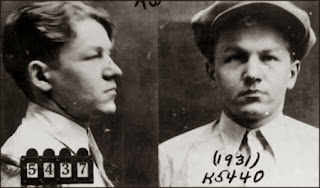
The six men would soon be identified as "the second Dillinger gang", due to Dillinger's extreme notoriety, but the gang had no leader. On March 13, the gang struck again at the First National Bank in Mason City, Iowa. Dillinger and Hamilton both were shot and wounded in the robbery, where they made away with $52,000. On April 3, federal agents ambushed and killed Eddie Green, though he was unarmed and they were uncertain of his identity. In the aftermath of the Mason City robbery, Nelson and John Paul Chase fled west to Reno, where their old bosses Bill Graham and Jim McKay were fighting a federal mail fraud case. Years later, the FBI determined that, on March 22, 1934, Nelson and Chase abducted the chief witness against the pair, Roy Fritsch, and killed him. Fritsch's quartered body, while never found, was said to have been thrown down an abandoned mine shaft.
On the afternoon of April 20, Nelson, Dillinger, Van Meter, Carroll, Hamilton, and gang associate (errand-runner) Pat Reilly, accompanied by Nelson's wife Helen and three girlfriends of the other men, arrived at the secluded Little Bohemia Lodge in Manitowish Waters, Wisconsin, for a weekend of rest. The gang's connection to the resort apparently came from the past dealings between Dillinger's attorney, Louis Piquett, and lodge owner Emil Wanatka. Though gang members greeted him by name, Wanatka maintained that he was unaware of their identities until some time on Friday night. According to Bryan Burrough's book
Public Enemies: America's Greatest Crime Wave and the Birth of the FBI, 1933–34, this most likely happened when Wanatka was playing cards with Dillinger, Nelson, and Hamilton. When Dillinger won a round and raked in the pot, Wanatka caught a glimpse of Dillinger's pistol concealed in his coat, and noticed that Nelson and the others also had shoulder holsters.
The following day, while she was away from the lodge with her young son at a children's birthday party, Wanatka's wife informed a friend, Henry Voss, that the Dillinger gang was at the lodge, and the F.B.I. was subsequently given the tip early on April 22. Melvin Purvis and a number of agents arrived by plane from Chicago, and with the gang's departure imminent, attacked the lodge quickly and with little preparation, and without notifying or obtaining help from local authorities.
Wanatka offered a one-dollar dinner special on Sunday nights, and the last of a crowd estimated at 75 were leaving as the agents arrived in the front driveway. A 1933 Chevrolet coupé was leaving at that moment with three departing lodge customers, John Hoffman, Eugene Boisneau and John Morris, who apparently did not hear an order to halt because the car radio drowned out the agents yelling at them to stop. The agents quickly opened fire on them, instantly killing Boisneau and wounding the others, and alerting the gang members inside.
Adding to the chaos, at this moment Pat Reilly returned to the lodge after an out-of-town errand for Van Meter, accompanied by one of the gang's girlfriends, Pat Cherrington. Accosted by the agents, Reilly and Cherrington backed out and escaped under fire, after a number of misfortunes.
Dillinger, Van Meter, Hamilton, and Carroll immediately escaped through the back of the lodge, which was unguarded, and made their way north on foot through woods and past a lake to commandeer a car and a driver at a resort a mile away. Carroll was not far behind them. He made it to Manitowish and stole a car, making it uneventfully to St. Paul.
Nelson, who had been outside the lodge in the adjacent cabin (he supposedly was irked that Dillinger got a better room), characteristically attacked the raiding party head on, exchanging fire with Purvis, before retreating into the lodge under a return volley from other agents. From there he slipped out the back and fled in the opposite direction from the others. Emerging from the woods ninety minutes later, a mile away from Little Bohemia, Nelson kidnapped the Lange couple from their home and ordered them to drive him away. Apparently dissatisfied with the car's speed, he quickly ordered them to pull up at a brightly lit house where the switchboard operator, Alvin Koerner, aware of the ongoing events, quickly phoned authorities at one of the involved lodges to report a suspicious vehicle in front of his home. Shortly after Nelson had entered the home, taking the Koerners hostage, Emil Wanatka arrived with his brother-in-law George LaPorte and a lodge employee (while a fourth man remained in the car) and were also taken prisoner. Nelson ordered Koerner and Wanatka back into their vehicle, where the fourth man remained unnoticed in the back seat.
As they were preparing to leave, with Wanatka driving at gunpoint, another car arrived with two federal agents – W. Carter Baum and Jay Newman, and a local constable, Carl Christensen. Nelson quickly took them by surprise at gunpoint and ordered them out of their car. As Newman, the driver was getting out, Nelson, apparently detecting a suspicious movement, opened fire with a custom-converted machine gun pistol, severely wounding Christensen and Newman and killing Baum, shot three times in the neck. Nelson was later quoted as having said that Baum had him "cold" and couldn't understand why he hadn't fired. It was found that the safety catch on Baum's gun was on.
Nelson then stole the FBI car. Less than 15 miles away, the car suffered a flat tire and finally became mired in mud as Nelson attempted unsuccessfully to change it. Back on foot, he wandered into the woods and took up residence with a Chippewa family in their secluded cabin for several days before making his final escape in another commandeered vehicle.
Three of the women who had accompanied the gang, including Nelson's wife Helen Gillis, were captured inside the lodge. After grueling interrogation by the F.B.I., the three were ultimately convicted on harboring charges and released on parole.
With an agent and an innocent bystander dead, and four more severely wounded, including two more innocent bystanders, and the complete escape of the Dillinger gang, the F.B.I came under severe criticism, with calls for J. Edgar Hoover's resignation and a widely circulated petition demanding Purvis' suspension.

At the time of the Little Bohemia shootout, Nelson's identity as a member of the Dillinger gang had been known to the F.B.I. for only two weeks. Following the killing of Baum, Nelson became nationally notorious and was made a high-priority target of the Bureau. The focus on him and the murdered agent also served to deflect some of the intense criticism directed at Hoover and Purvis following the Little Bohemia debacle.
A day after the Little Bohemia raid, Dillinger, Hamilton, and Van Meter ran through a police road block near Hastings, Minnesota, drawing fire from officers there. A ricocheting bullet struck Hamilton in the back, fatally wounding him. Hamilton reportedly died in hiding on April 30 or May 1, 1934, and was secretly buried by Dillinger and others including Nelson, who had rejoined the gang in Aurora, Illinois.
On June 7, gang member Tommy Carroll was killed when trying to escape arrest in Waterloo, Iowa. Carroll and his girlfriend Jean Crompton (who had been captured and tried with Helen Gillis after Little Bohemia) had grown close to the Nelsons, and his death was a personal blow to them. The couple went into hiding during the ensuing weeks, and although they were in the Chicago area, their precise movements in this period remain obscure. The Nelsons reportedly lived in various tourist camps, while continuing to secretly meet with family members whenever possible.
On June 27, former gang errand-runner and Little Bohemia fugitive Pat Reilly was surrounded as he slept and was captured alive in St. Paul, Minnesota.
On the morning of June 30, Nelson, Dillinger, Van Meter, and one or more additional accomplices robbed the Merchants National Bank in South Bend, Indiana. One man involved in the robbery is believed to have possibly been Pretty Boy Floyd, based on several eyewitness identifications as well as the later account of Joseph "Fatso" Negri, an old Nelson associate from California who was serving as a gofer to the gang at this time. Another rumored participant was Nelson's childhood friend Jack Perkins, also an associate of the gang at that time. (Perkins would later be tried for the robbery and acquitted).
When the robbery began, a policeman named Howard Wagner had been directing traffic outside; responding quickly to the scene and attempting to draw his gun, he was shot dead by Van Meter, who was stationed outside the bank. Also outside the bank, Nelson exchanged fire with a local jeweler, Harry Berg, who had shot him in the chest - ineffectively, because of Nelson's bullet-proof vest. As Berg retreated into his store under a return volley from Nelson, a man in a parked car was wounded. Nelson also grappled briefly with a teenage boy, Joseph Pawlowski, who tackled him until Nelson (or Van Meter) stunned Powlowski with a blow from his gun. When Dillinger and the man identified as Floyd (unconfirmed) emerged from the bank with sacks containing $28,000, they brought three hostages with them (including the bank president) to deter gunfire from three patrolmen on the scene. The policemen fired nonetheless, wounding two of the hostages before grazing Van Meter in the head. The gang escaped, and Van Meter recovered. In the constant and chaotic exchange of gunfire, several other bystanders were wounded by shots, ricochets, or flying broken glass. It proved to be the last confirmed robbery for all of the known and suspected participants, including Floyd (unconfirmed).
During the month of July, as the FBI manhunt for him continued, Nelson and his wife fled to California with associate John Paul Chase, who would remain with Nelson for the rest of his life. Upon their return to Chicago on July 15, the gang held a reunion meeting at a favorite rendezvous site. When the meeting was interrupted by two Illinois state troopers, Fred McAllister and Gilbert Cross, Nelson fired on their vehicle with his converted "machine gun pistol", wounding both men as the gangsters retreated. Cross was badly injured, but both men survived. Nelson's responsibility was uncertain until verification came later in the form of a confession from Chase.
On July 22, 1934, Dillinger was ambushed and killed by FBI agents outside the Biograph Theater in Lincoln Park, Chicago. The next day the FBI announced that "Pretty Boy" Floyd was now Public Enemy No. 1. On October 22, 1934, Floyd was killed in a shootout with agents including Melvin Purvis. Subsequently, J. Edgar Hoover announced that "Baby Face" Nelson was now Public Enemy No. 1.
On August 23, Van Meter was ambushed and killed by police in St. Paul, Minnesota, leaving Nelson as the sole survivor of the so-called "Second Dillinger Gang".
In the ensuing months, Nelson and his wife, usually accompanied by Chase, drifted west to cities including Sacramento and San Francisco, California and Reno and Las Vegas, Nevada. They often stayed in auto camps, including Walley's Hot Springs, outside of Genoa, Nevada, where they hid out from October 1 before returning to Chicago around November 1. Nelson's movements during the final month of his life are largely unknown.
By the end of the month, FBI interest had settled on a former hideout of Nelson's, the Lake Como Inn in Lake Geneva, Wisconsin, where it was believed that Nelson might return for the winter. When the Nelsons and Chase did return to the inn on November 27, they briefly came face to face with surprised and unprepared FBI agents who had staked it out. The fugitives sped away before any shots were fired. Armed with a description of the car (a black Ford V8) and its license plate number (639-578), agents swarmed into the area.
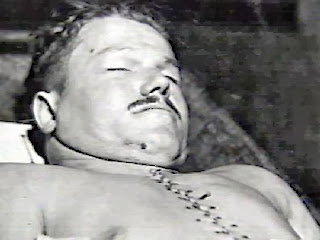
A short but furious gun battle between FBI agents and Nelson took place on November 27, 1934 outside Chicago in the town of Barrington, resulting in the deaths of Nelson and FBI Special Agents Herman "Ed" Hollis and Samuel P. Cowley.
The Barrington gun battle erupted as Nelson, with Helen Gillis and John Paul Chase as passengers, drove a stolen V8 Ford south towards Chicago on State Highway 14. Nelson, always keen to spot G-Men, caught sight of a sedan driven in the opposite direction by FBI agents Thomas McDade and William Ryan. Nelson hated police and federal agents and used a list of license plates he had compiled to hunt them at every opportunity. The agents and the outlaw simultaneously recognized each other and after several U-turns by both vehicles, Nelson wound up in pursuit of the agents' car. Nelson and Chase fired at the agents and shattered their car's windshield. After swerving to avoid an oncoming milk truck, Ryan and McDade skidded into a field and anxiously awaited Nelson and Chase who had stopped pursuing. The agents did not know that a shot fired by Ryan had punctured the radiator of Nelson's Ford or that the Ford was being pursued by a Hudson automobile driven by two more agents: Herman Hollis (who was alleged to have delivered the fatal shot to a wounded Pretty Boy Floyd a month earlier) and Cowley. As a result, Ryan and McDade were oblivious to the events that happened next.
With his vehicle losing power and his pursuers attempting to pull alongside, Nelson swerved into the entrance of Barrington's North Side Park and stopped opposite three gas stations. Hollis and Cowley overshot them by over 100 feet (30 m), stopped at an angle, exited their vehicle's passenger door, under heavy gun fire from Nelson and Chase and took cover behind the car. The ensuing shootout was witnessed by more than 30 people.
Nelson's wife, fleeing into an open field under instructions from Nelson, turned briefly in time to see Nelson mortally wounded. He grasped his side and sat down on the running board as Chase continued to fire from behind their car. Nelson, advancing toward the agents, fired so rapidly with a .351 rifle that bystanders mistook it for a machine gun. Six bullets from Cowley's submachine gun eventually struck Nelson in the chest and stomach before Nelson mortally wounded Cowley with bullets to the chest and stomach, while pellets from Hollis's shotgun struck Nelson in the legs and knocked him down. As Nelson regained his feet, Hollis, possibly already wounded, moved to better cover behind a utility pole while drawing his pistol but was killed by a bullet to the head before he could return fire. Nelson stood over Hollis's body for a moment, then limped toward the agents's car. Nelson was too badly wounded to drive, so Chase got behind the wheel and the two men and Nelson's wife fled the scene. Nelson had been shot seventeen times; seven of Cowley's bullets had struck his torso and ten of Hollis's shotgun pellets had hit his legs. After telling his wife "I'm done for", Nelson gave directions as Chase drove them to a safe house on Walnut Street in Wilmette. Nelson died in bed with his wife at his side, at 7:35 p.m.
Hollis was severely wounded in the head and was declared dead soon after arriving at the hospital. At a different hospital, Cowley lived for long enough to confer briefly with Melvin Purvis and have surgery, before succumbing to a stomach wound similar to Nelson's. Following an anonymous telephone tip, Nelson's body was discovered wrapped in a blanket by FBI agent Walter Walsh, in front of St. Peter Catholic Cemetery in Skokie, which still exists. Helen Gillis later stated that she had placed the blanket around Nelson's body because, "He always hated being cold..."
Newspapers then reported, based on the questionable wording of an order from J. Edgar Hoover ("...find the woman and give her no quarter"), that the FBI had issued a "death order" for Nelson's widow, who wandered the streets of Chicago as a fugitive for several days, described in print as America's first female "public enemy". After surrendering on Thanksgiving Day, Helen Gillis, who had been paroled after capture at Little Bohemia, served a year in prison for harboring her husband. Chase was apprehended later and served a term at Alcatraz.
Sources:
Wikipedia
This work released through CC 3.0 BY-SA -
Creative Commons


